 EN
EN



Beverage-centered operations face unique demands that distinguish them from general foodservice environments. Whether you manage a smoothie bar, juice café, specialty coffee shop, or hotel beverage station, the equipment you choose must deliver consistent performance under relentless daily use. Among all the tools in your operation, the heavy duty commercial blender stands as the backbone of productivity, directly influencing product quality, speed of service, customer satisfaction, and ultimately, profitability. Understanding how to deploy this critical piece of equipment effectively transforms your beverage operation from merely functional to truly competitive.
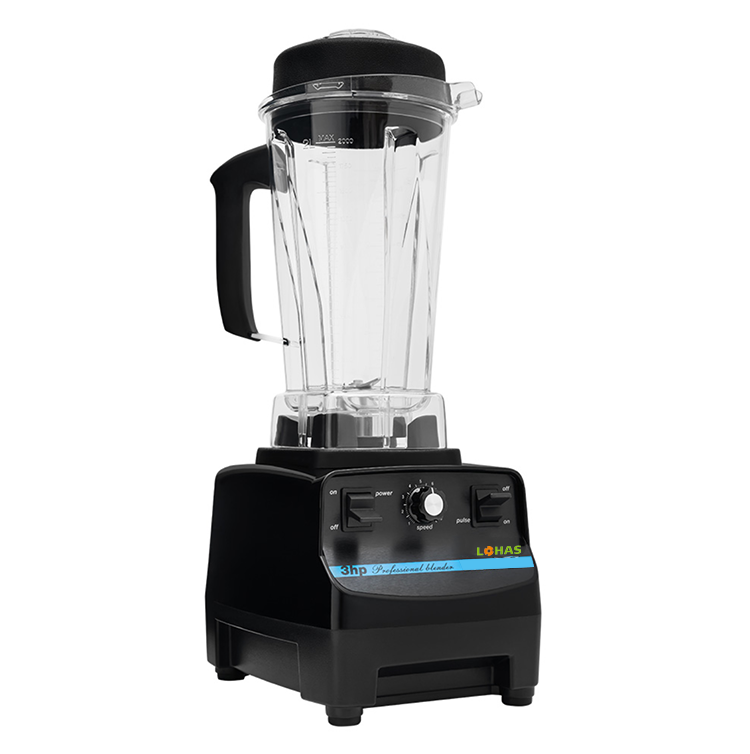
The integration of a heavy duty commercial blender into beverage-focused businesses goes far beyond simply purchasing powerful equipment. It involves strategic placement, workflow optimization, maintenance protocols, staff training, and menu engineering that maximizes return on investment. This article explores the multifaceted role of commercial blending equipment in beverage operations, examining practical applications across different business models, operational considerations that impact daily performance, and strategic decisions that separate thriving beverage businesses from those struggling with equipment limitations and operational bottlenecks.
Operational Demands in High-Volume Beverage Environments
Understanding Peak Service Pressures
Beverage-centered operations experience service patterns vastly different from traditional restaurants. Morning rushes at juice bars can see continuous blending for two to three hours straight, with each heavy duty commercial blender processing dozens of drinks without pause. During these peak periods, equipment must maintain consistent performance despite elevated motor temperatures, continuous blade rotation, and thermal stress on seals and bearings. The difference between consumer-grade blenders and true commercial units becomes immediately apparent under these conditions, as residential models typically fail within days when subjected to commercial workflow intensity.
The challenge intensifies in operations serving complex beverages requiring extended blending times. Nut-based milk alternatives, thick açaí bowls, and protein-heavy smoothies demand sustained high-torque blending that tests equipment durability. A properly specified heavy duty commercial blender addresses these demands through reinforced motor housings, advanced cooling systems, and blade assemblies engineered for continuous duty cycles. These features translate directly into operational reliability, reducing the catastrophic service interruptions that occur when underpowered equipment fails during peak demand periods.
Ingredient Processing Complexity
Modern beverage menus incorporate ingredients that challenge blending equipment in diverse ways. Frozen fruit chunks, ice blocks, fibrous vegetables like kale and celery, and hard ingredients such as whole nuts or seeds each require different mechanical approaches. The heavy duty commercial blender must deliver sufficient blade speed and motor torque to process these varied textures while maintaining consistent particle size and smooth final texture. Inadequate equipment produces beverages with unpleasant texture variations, seed fragments, or incomplete ice crushing that compromise customer experience and generate remakes.
Temperature management during blending becomes particularly critical with certain ingredients. Extended blending of frozen components can cause thermal friction that partially melts ice, diluting flavor concentration and altering intended texture. Conversely, insufficient blending leaves chunks that create unpleasant drinking experiences. Professional-grade equipment balances blade speed, container design, and motor power to achieve thorough blending within optimal time windows. This engineering precision ensures that a heavy duty commercial blender processes difficult ingredients efficiently without excessive blending time that degrades product quality or reduces throughput capacity.
Consistency as Competitive Advantage
In beverage operations, product consistency directly correlates with customer retention and brand reputation. Every smoothie, frozen coffee, or blended juice must match established quality standards regardless of which staff member operates the equipment or which time of day service occurs. The heavy duty commercial blender contributes to consistency through precise speed controls, programmable blending cycles, and mechanical stability that eliminates performance variations. When properly implemented, this equipment removes human judgment from the blending process, ensuring that technique differences between employees don't compromise product quality.
Beyond individual drink consistency, commercial blenders enable beverage operations to scale recipes across multiple locations while maintaining brand integrity. Standardized blending protocols programmed into equipment ensure that franchise locations or multi-unit operations deliver identical products despite geographic separation and different staff. This scalability transforms beverage concepts from single-location businesses into viable expansion opportunities. The investment in quality equipment establishes the operational foundation necessary for growth without quality degradation.
Strategic Equipment Deployment in Different Beverage Business Models
Smoothie and Juice Bar Applications
Smoothie bars represent perhaps the most demanding application environment for commercial blending equipment. These operations typically process thirty to sixty blended beverages per hour during peak periods, with each drink requiring forty-five to ninety seconds of blending time. Under these conditions, a heavy duty commercial blender must operate continuously without performance degradation or overheating. Multi-blender stations become essential, with properly designed layouts allowing staff to load one unit while another blends, maintaining service flow without bottlenecks.
Menu engineering in these environments must align with equipment capabilities. Offering beverages that require dramatically different blending times creates workflow complications that reduce overall throughput. Successful operations design menus where most items process within similar time frames, allowing staff to develop efficient rhythm and timing. The heavy duty commercial blender selection should account for the densest, most challenging menu items rather than average recipes, ensuring that equipment handles worst-case scenarios without strain. This approach prevents the common mistake of specifying equipment based on typical drinks, only to discover that signature items overtax the system.
Coffee Shop Integration
Specialty coffee shops increasingly incorporate blended beverages alongside traditional espresso-based drinks. This integration creates unique workflow challenges as baristas must shift between precise espresso preparation and rapid smoothie production. The heavy duty commercial blender in this environment must occupy minimal counter space while remaining easily accessible during mixed-order sequences. Noise becomes a critical consideration, as excessive blending sound disrupts the café atmosphere and interferes with customer conversations and order-taking communication.
Equipment selection for coffee-shop applications should prioritize models with sound-dampening features and quick-blend capabilities that minimize disruption. Programmable blend cycles allow baristas to initiate blending and immediately return attention to espresso preparation, optimizing labor efficiency. The physical positioning of the heavy duty commercial blender within the coffee bar layout determines whether blended drinks enhance profitability or create operational friction. Proper placement near ice storage, refrigeration, and handoff points minimizes staff movement and reduces service time per beverage.
Hotel and Restaurant Beverage Stations
Hotels and full-service restaurants utilize commercial blenders differently than dedicated beverage operations. These environments experience intermittent demand rather than continuous processing, with equipment sitting idle for extended periods before sudden bursts of activity. The heavy duty commercial blender in these settings must tolerate irregular use patterns while delivering immediate performance when needed. Quick startup without warm-up requirements and reliable operation after extended dormancy become important selection criteria.
Menu applications in hotel environments often emphasize frozen cocktails, breakfast smoothies, and specialized drink programs. These beverages typically incorporate alcohol, dairy products, and premium ingredients that command higher price points than quick-service smoothies. Equipment must deliver refined texture and professional presentation quality that justifies premium positioning. The heavy duty commercial blender serves not merely as production equipment but as a tool enabling profitable beverage programming that enhances overall revenue per guest. Selection should emphasize build quality and performance consistency over maximum throughput capacity.
Operational Integration and Workflow Optimization
Station Design and Ergonomics
The physical workspace surrounding commercial blending equipment dramatically impacts operational efficiency and staff fatigue. Optimal station design positions the heavy duty commercial blender within easy reach of refrigeration, ice machines, and ingredient storage, minimizing staff movement between blend cycles. Counter height must accommodate comfortable blender jar removal and ingredient loading without awkward reaching or bending. Many operations discover too late that equipment placement forcing repetitive uncomfortable movements creates staff fatigue and slows service during extended shifts.
Workspace organization should follow logical sequence from order receipt through ingredient assembly, blending, and customer handoff. The heavy duty commercial blender becomes the central pivot point in this flow, with supporting elements arranged to facilitate smooth transitions between process stages. Successful designs incorporate dedicated prep areas for ingredient portioning, clearly labeled storage for add-ins and supplements, and strategic positioning of serving containers. This systematic approach transforms blending operations from chaotic improvisation into refined choreography that maximizes throughput while minimizing error rates.
Ingredient Preparation and Staging
Efficient beverage operations recognize that blending represents only one component of total service time. Ingredient preparation, portioning, and staging significantly impact overall speed and consistency. Pre-portioned frozen fruit packs, measured protein powder containers, and organized liquid bases eliminate decision-making and measurement steps during service. The heavy duty commercial blender operates most efficiently when staff simply combine pre-measured components and initiate programmed blend cycles, removing variables that slow service and introduce inconsistency.
Advanced operations implement batch preparation systems where less perishable components are assembled during slow periods for rapid deployment during rushes. This approach requires careful food safety management and rotation protocols to prevent spoilage while maximizing efficiency. The heavy duty commercial blender becomes one element in a larger production system where preparation, blending, and finishing work in coordinated sequence. Understanding this broader context helps operators identify bottlenecks that limit capacity, which often occur in preparation or finishing stages rather than blending itself.
Staff Training and Operational Standards
Equipment capability means little without properly trained operators who understand how to maximize performance while preventing damage. Comprehensive training programs teach staff not just operational procedures but the reasoning behind protocols. Understanding why certain ingredients require specific blend sequences or why blade assembly must be tightened to exact specifications creates ownership and attention to detail that prevents costly mistakes. The heavy duty commercial blender may tolerate operator error better than consumer equipment, but proper technique still significantly extends service life and maintains performance.
Operational standards should document precise procedures for each menu item, removing ambiguity that creates inconsistency. These standards specify ingredient order, liquid ratios, blend duration, and texture checkpoints that ensure quality. Regular audits verify adherence to standards and identify training gaps before they compromise customer experience. The heavy duty commercial blender performs best when operators treat it as precision equipment rather than simple kitchen appliances, applying consistent technique and attention to maintenance protocols that preserve optimal function.
Maintenance Protocols and Equipment Longevity
Daily Cleaning and Sanitation
Proper maintenance begins with rigorous daily cleaning that prevents residue buildup and bacterial contamination. The heavy duty commercial blender requires complete disassembly of jar, blade assembly, and seals for thorough cleaning after each service period. Many operators underestimate the importance of removing blade assemblies for separate cleaning, allowing protein residues and fruit particles to accumulate in threads and seal surfaces. This neglect creates sanitation hazards and accelerates seal degradation that leads to leaks and motor damage.
Effective cleaning protocols incorporate both manual washing and sanitizer application following food safety guidelines. Staff must understand that visible cleanliness differs from microbiological sanitation, requiring chemical sanitizers or high-temperature washing to achieve food-safe conditions. The heavy duty commercial blender base also requires attention, with spills and splatters wiped immediately to prevent sugar and protein residues from hardening on surfaces. Regular deep cleaning of cooling vents prevents dust accumulation that compromises motor cooling efficiency and shortens equipment lifespan.
Preventive Maintenance Schedules
Beyond daily cleaning, commercial blenders require scheduled preventive maintenance that addresses wear components before failure occurs. Blade assemblies lose sharpness gradually, reducing blending efficiency and increasing motor strain. Replacement schedules based on usage volume ensure that blades maintain optimal cutting performance. Seals and gaskets deteriorate from repeated temperature cycles and chemical exposure, requiring replacement at intervals determined by manufacturer specifications and observed wear patterns. The heavy duty commercial blender delivers reliable service only when operators proactively address these consumable components.
Motor performance monitoring helps identify developing problems before catastrophic failure. Unusual sounds, vibration changes, or performance degradation signal issues requiring immediate attention. Establishing baseline performance metrics when equipment is new provides comparison points that reveal gradual decline. The heavy duty commercial blender represents significant capital investment, and preventive maintenance extends useful life substantially compared to reactive approaches that operate equipment until failure. Scheduled maintenance during slow periods prevents emergency breakdowns during peak service when equipment availability is critical.
Troubleshooting Common Issues
Even well-maintained equipment experiences occasional problems requiring troubleshooting and correction. Inconsistent blending results often stem from worn blades, improper ingredient ratios, or incorrect blending sequences rather than motor problems. Systematic diagnosis eliminates variables to identify root causes rather than assuming equipment failure. The heavy duty commercial blender may simply require blade replacement or technique correction rather than costly repair or replacement. Training staff to recognize normal versus abnormal operation enables early problem detection before minor issues escalate.
Leak development represents one of the most common problems in commercial blending equipment. Identifying whether leaks originate from worn seals, improperly tightened assemblies, or damaged jar threads determines appropriate corrective action. Many leaks result from overtightening that damages threads or cross-threading during assembly. The heavy duty commercial blender requires proper technique during reassembly after cleaning, with components threaded carefully and tightened to appropriate torque specifications. Understanding these nuances prevents damage while ensuring reliable seal performance.
Menu Engineering and Revenue Optimization
Developing Equipment-Appropriate Menus
Successful beverage operations design menus that showcase equipment capabilities while maintaining operational efficiency. Understanding what the heavy duty commercial blender does exceptionally well guides menu development toward offerings that leverage these strengths. Frozen drinks, thick smoothie bowls, nut-based beverages, and textured plant-based concoctions represent applications where commercial equipment demonstrates clear advantages over lesser alternatives. Menus emphasizing these applications justify premium pricing while delivering products competitors cannot easily replicate.
Conversely, offering menu items that don't require commercial blending capability wastes equipment potential and dilutes positioning. Simple juice blends or lightly processed beverages don't showcase the heavy duty commercial blender's abilities and might be produced more efficiently through other methods. Strategic menu design concentrates offerings where commercial equipment creates competitive differentiation, allowing premium pricing that justifies equipment investment. This focused approach builds brand identity around capabilities that smaller competitors cannot match.
Pricing Strategy and Cost Management
Equipment investment costs must be recovered through pricing strategies that reflect value delivered. The heavy duty commercial blender enables consistent quality, rapid service, and unique menu offerings that justify higher price points than basic beverages. Understanding equipment depreciation and maintenance costs informs minimum pricing thresholds necessary for profitability. Many operators underprice blended beverages by failing to account for full equipment costs, creating unsustainable economics despite high sales volume.
Ingredient costs represent another critical consideration in beverage pricing. The heavy duty commercial blender processes ingredients efficiently, but premium menu positioning requires quality components that carry higher costs. Balancing ingredient quality, portion sizes, and pricing creates offerings that customers perceive as valuable while maintaining healthy profit margins. Regular cost analysis identifies opportunities to adjust formulations or pricing to maintain profitability as ingredient costs fluctuate. Strategic operators view the heavy duty commercial blender as enabling premium product delivery rather than simply processing commodity ingredients.
Seasonal Menu Adaptations
Beverage preferences shift with seasons, creating opportunities for menu evolution that maintains customer interest. The heavy duty commercial blender adapts readily to seasonal ingredients, from summer berry harvests to autumn spice profiles and winter citrus offerings. Seasonal menu rotations prevent customer fatigue while optimizing ingredient costs through strategic sourcing of peak-season produce. These adaptations keep operations fresh and relevant without requiring equipment changes or major operational disruptions.
Limited-time offerings create urgency and trial opportunities that drive incremental revenue. The heavy duty commercial blender allows rapid menu testing and iteration, with new recipes easily developed and refined based on customer response. This flexibility supports responsive menu management that capitalizes on trends and local preferences. Successful operations maintain core offerings for consistency while rotating seasonal and promotional items that generate excitement and encourage repeat visits.
FAQ
What makes a heavy duty commercial blender necessary for beverage operations rather than residential models?
Commercial operations subject blending equipment to continuous use patterns that quickly destroy residential models designed for intermittent home use. A heavy duty commercial blender features reinforced motors rated for continuous duty cycles, advanced cooling systems that dissipate heat during extended operation, and blade assemblies engineered to withstand constant impact with ice and frozen ingredients. These units also incorporate metal drive couplings rather than plastic components that fail under commercial stress. The difference becomes apparent within days of commercial use, as residential blenders overheat, strip gears, or burn out motors when processing dozens of beverages consecutively. Commercial equipment represents essential infrastructure rather than optional upgrade for any serious beverage operation.
How many blenders does a typical smoothie bar need to handle peak service periods?
Most smoothie bars operating at moderate to high volume require at least two heavy duty commercial blenders to maintain service flow during peak periods. This configuration allows one blender to process while staff loads the second unit, eliminating dead time between drinks. High-volume locations processing more than forty drinks per hour during rushes often deploy three or four blenders with designated operators managing parallel stations. The specific number depends on menu complexity, average blending time per item, and peak customer volume. Undersizing blender capacity creates bottlenecks that frustrate customers and limit revenue potential regardless of demand. Properly equipped operations size equipment based on peak requirements rather than average volume to prevent service delays during critical revenue periods.
What maintenance intervals keep commercial blenders operating reliably in beverage service?
Daily maintenance includes complete disassembly and sanitization of all contact surfaces, immediate cleaning of spills on the base unit, and visual inspection for developing issues. Weekly tasks should involve deep cleaning of the motor housing and cooling vents, lubrication of removable components where specified by manufacturer, and detailed inspection of seals and gaskets for wear. Monthly maintenance requires blade sharpness assessment and replacement if performance declines, drive coupling inspection for wear, and thorough operational testing to establish performance baselines. The heavy duty commercial blender also benefits from quarterly professional servicing that addresses internal components not accessible during routine maintenance. These intervals represent general guidelines that should be adjusted based on usage intensity, with high-volume operations requiring more frequent attention to wear components.
Can one heavy duty commercial blender model handle all beverage applications effectively?
While versatile commercial blenders address many applications competently, no single model optimizes every beverage type equally. Operations focused primarily on frozen drinks and ice crushing benefit from models emphasizing raw power and ice-processing blade design. Businesses concentrating on smoothies and protein beverages require efficient blending of fibrous vegetables and thorough incorporation of powdered supplements. Coffee shops adding occasional blended drinks prioritize compact size and sound reduction over maximum throughput. The heavy duty commercial blender selection should align with primary menu focus and volume expectations rather than attempting to find one universal solution. Many operations deploy different blender models for distinct applications, matching equipment capabilities to specific beverage categories for optimal results across the complete menu range.
Table of Contents
- Operational Demands in High-Volume Beverage Environments
- Strategic Equipment Deployment in Different Beverage Business Models
- Operational Integration and Workflow Optimization
- Maintenance Protocols and Equipment Longevity
- Menu Engineering and Revenue Optimization
-
FAQ
- What makes a heavy duty commercial blender necessary for beverage operations rather than residential models?
- How many blenders does a typical smoothie bar need to handle peak service periods?
- What maintenance intervals keep commercial blenders operating reliably in beverage service?
- Can one heavy duty commercial blender model handle all beverage applications effectively?