 EN
EN



The commercial blending equipment market presents a wide spectrum of options, from affordable entry-level machines to robust industrial-grade units designed for relentless daily operation. Understanding what truly separates a heavy duty commercial blender from basic entry models goes far beyond price tags and marketing claims. The distinctions involve fundamental engineering differences in motor architecture, blade metallurgy, container materials, thermal management systems, and operational durability that directly impact production capacity, product consistency, and total cost of ownership in professional food service and beverage environments.
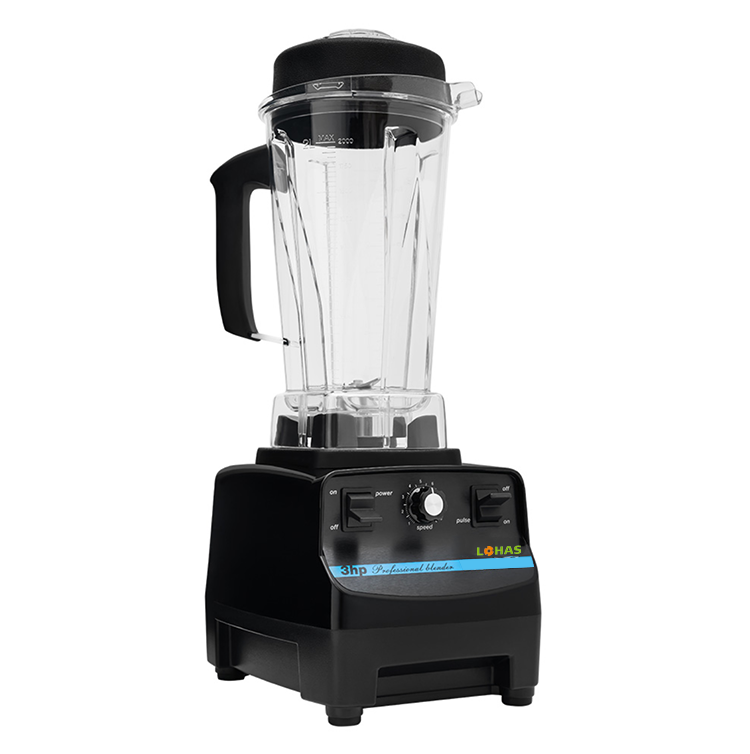
Commercial kitchen operators, juice bar managers, and food processing facility supervisors frequently face critical purchasing decisions when selecting blending equipment. The performance gap between entry-level commercial blenders and genuinely heavy duty commercial blender systems becomes immediately apparent under sustained operational demands. Entry models might suffice for occasional use in low-volume settings, but they quickly reveal their limitations when subjected to continuous blending cycles, dense ingredient loads, or extended service periods. Recognizing these core architectural differences enables informed equipment investments that align with actual operational requirements rather than initial purchase price considerations alone.
Motor Power Architecture and Performance Characteristics
Horsepower Ratings and Continuous Duty Capability
The motor represents the fundamental differentiator between entry-level and professional-grade commercial blending equipment. Entry models typically feature motors ranging from 0.5 to 1.5 horsepower, adequate for light-duty applications with intermittent usage patterns. These motors often incorporate thermal protection circuits that automatically shut down the unit when internal temperatures exceed safe thresholds, limiting continuous operation time to brief intervals. In contrast, a genuine heavy duty commercial blender employs motors rated between 2.5 and 5 horsepower, engineered specifically for continuous duty cycles without thermal limitations. These industrial-grade motors incorporate advanced cooling systems, heavy-gauge copper windings, and reinforced bearing assemblies that maintain consistent performance throughout extended operational periods.
The continuous duty rating distinguishes professional equipment from consumer-inspired commercial models. Entry-level blenders typically carry duty cycle ratings of 30 to 50 percent, meaning they require cooling periods equal to or exceeding their active blending time. Professional heavy duty commercial blender units feature 100 percent duty cycle ratings, enabling operators to run consecutive blending tasks without mandatory rest intervals. This capability proves essential in high-volume production environments where equipment downtime directly impacts service speed and customer satisfaction. The motor housing construction also differs substantially, with professional units featuring cast aluminum or steel enclosures providing superior heat dissipation compared to the plastic housings common in entry models.
Torque Delivery and Load Handling Capacity
Beyond raw horsepower specifications, torque characteristics fundamentally separate professional blending equipment from entry-level alternatives. Entry models typically deliver peak torque at higher RPM ranges, making them effective for liquid-based blends but struggling with dense, viscous, or frozen ingredients that demand substantial starting torque. A heavy duty commercial blender incorporates motor designs that generate maximum torque at lower RPM ranges, providing the mechanical advantage necessary to initiate blade rotation even under heavy ingredient loads. This low-end torque capability prevents motor stalling and ensures consistent blend initiation regardless of container contents.
The gearing systems and drive mechanisms further distinguish professional equipment. Entry-level commercial blenders frequently employ direct-drive configurations connecting motor shafts directly to blade assemblies through simple coupling mechanisms. While this approach reduces mechanical complexity and initial manufacturing costs, it transmits all operational stresses directly to motor bearings and internal components. Professional heavy duty commercial blender systems often incorporate reinforced coupling assemblies or gear reduction mechanisms that multiply available torque while protecting motor internals from shock loads and ingredient resistance. These transmission systems enable the motor to operate within optimal efficiency ranges while delivering substantially greater force to the blade assembly, extending component longevity and maintaining blend consistency across diverse ingredient profiles.
Blade Assembly Design and Material Engineering
Metallurgical Specifications and Hardness Standards
The blade assembly represents the interface between motor power and ingredient processing, making material selection and geometric design critical performance factors. Entry-level commercial blenders typically utilize stainless steel blade assemblies manufactured from standard 400-series alloys with Rockwell hardness ratings between 52 and 56 HRC. While adequate for softer ingredients and occasional ice crushing, these blades experience accelerated edge wear when processing frozen fruits, nuts, fibrous vegetables, or other abrasive materials. Professional heavy duty commercial blender units employ blade assemblies fabricated from premium stainless steel alloys or specialized tool steel compositions with hardness ratings exceeding 58 HRC, substantially improving edge retention and operational lifespan.
The blade thickness and cross-sectional geometry also differ significantly between equipment categories. Entry models commonly feature blade stock measuring 2.0 to 2.5 millimeters in thickness, providing adequate structural integrity for light-duty applications but susceptible to flexing or permanent deformation under sustained heavy loads. Professional heavy duty commercial blender systems utilize blade stock ranging from 3.0 to 4.0 millimeters thick, incorporating tapered edge geometries that concentrate cutting force while maintaining structural rigidity. This increased mass and rigidity combination prevents blade deflection during high-speed operation, ensuring consistent particle size reduction and minimizing vibration transmission to the motor assembly. The blade-to-hub connection methods similarly reflect engineering priorities, with entry models using set screw attachments or press-fit connections while professional units employ threaded retention systems or reinforced welded assemblies preventing blade loosening under operational stresses.
Blade Geometry and Hydrodynamic Efficiency
Beyond material specifications, blade geometry fundamentally influences blending efficiency and product quality. Entry-level commercial blenders typically feature two-blade or four-blade configurations with relatively simple airfoil profiles optimized for basic liquid circulation and ice crushing tasks. These geometric designs create adequate vortex patterns for smoothie preparation and beverage blending but lack the sophisticated flow control necessary for emulsification, nut butter production, or hot soup processing. A genuine heavy duty commercial blender incorporates advanced blade geometries featuring multiple cutting edges, variable pitch angles, and asymmetric blade positioning that creates complex three-dimensional flow patterns within the container.
These engineered blade configurations generate strategic circulation patterns that continuously draw ingredients from container peripheries toward the blade zone, eliminate dead spots, and ensure complete ingredient incorporation without manual intervention. The blade tip speed, determined by blade diameter and rotational velocity, represents another crucial performance parameter. Entry models typically achieve blade tip speeds between 200 and 250 miles per hour, sufficient for most beverage applications but limiting processing versatility. Professional heavy duty commercial blender systems generate blade tip speeds exceeding 280 miles per hour, providing the kinetic energy necessary for cell rupture in leafy greens, efficient nut particle reduction, and rapid temperature elevation during friction-heated soup preparation. This velocity differential directly correlates with blend cycle time reduction and final product smoothness, particularly when processing fibrous ingredients or achieving specific texture targets.
Container Construction and Thermal Management Systems
Material Selection and Impact Resistance
The blending container serves dual functions as ingredient containment vessel and acoustic dampening chamber, making material selection and structural design critical equipment characteristics. Entry-level commercial blenders predominantly utilize polycarbonate containers offering acceptable impact resistance and cost efficiency for basic applications. While polycarbonate provides adequate clarity for monitoring blend progress and withstands moderate impacts, it exhibits susceptibility to scratching, cloudiness development over time, and chemical interaction with acidic ingredients or cleaning agents. These containers typically feature wall thicknesses between 2.5 and 3.5 millimeters, providing minimal thermal insulation and limited resistance to thermal shock when processing hot ingredients or transitioning between temperature extremes.
Professional heavy duty commercial blender systems frequently employ copolyester containers or reinforced polycarbonate formulations with wall thicknesses exceeding 4.0 millimeters, substantially improving thermal shock resistance and mechanical durability. Premium equipment lines incorporate stainless steel containers offering superior thermal management, complete chemical inertness, and virtually unlimited operational lifespan. The container base design also differs substantially, with entry models featuring simple flat-bottom configurations while professional units incorporate sophisticated base geometries with radiused corners, strategic ribbing patterns, and optimized blade clearances that enhance ingredient circulation and minimize residual material after pouring. These engineering refinements directly impact portion yield, cleaning efficiency, and blend consistency across varying batch sizes.
Sealing Systems and Component Longevity
The blade assembly sealing system represents a critical wear component differentiating equipment reliability and maintenance requirements. Entry-level commercial blenders typically employ single O-ring seals manufactured from standard nitrile rubber compounds adequate for ambient temperature applications and basic water resistance. These sealing systems experience accelerated degradation when exposed to hot liquids, acidic ingredients, or cleaning chemicals, requiring frequent replacement to prevent leakage. A professional heavy duty commercial blender incorporates multi-stage sealing systems featuring food-grade silicone or EPDM elastomers with temperature resistance exceeding 200 degrees Fahrenheit and superior chemical compatibility across diverse ingredient profiles.
These advanced sealing configurations often incorporate backup retention rings, spring-loaded compression mechanisms, or dual-seal architectures that maintain positive sealing force even as primary seal components experience normal wear. The drive coupling assembly connecting the container to the motor base similarly reflects equipment grade. Entry models utilize simple friction-fit connections or basic locking tabs that require precise alignment and experience wear over repeated container installation cycles. Professional heavy duty commercial blender systems feature precision-machined coupling interfaces with positive engagement mechanisms, anti-rotation features, and robust retention systems that ensure reliable connection even after thousands of container mounting cycles. These engineering differences directly impact operational safety, user convenience, and equipment longevity in demanding commercial environments.
Control Systems and Operational Flexibility
Interface Design and Programming Capabilities
The control interface represents the operational bridge between user intent and machine execution, with substantial capability differences across equipment categories. Entry-level commercial blenders typically feature basic rotary dial controls or simple push-button interfaces offering limited speed selections and manual operation only. These systems require operator judgment for blend duration and speed adjustment, introducing variability based on staff experience and attention level. Professional heavy duty commercial blender units incorporate advanced control systems featuring digital interfaces, pre-programmed blend cycles, and microprocessor-based execution that ensures consistent results regardless of operator skill level.
These intelligent control systems monitor motor current draw, automatically adjust speed profiles based on load resistance, and execute sophisticated acceleration ramps that prevent ingredient splatter while maximizing processing efficiency. The program memory capacity enables storage of multiple optimized blend cycles tailored to specific menu items, allowing operators to initiate complex multi-stage blend sequences with single button activation. Professional units also incorporate safety interlocks preventing motor activation without proper container installation, thermal monitoring systems that provide early warning of abnormal operating conditions, and diagnostic capabilities that facilitate troubleshooting and preventive maintenance scheduling. These control sophistication differences directly impact labor efficiency, product consistency, and equipment protection in commercial operational contexts.
Speed Range and Acceleration Control
The operational speed range and acceleration characteristics fundamentally influence processing versatility and final product quality. Entry-level commercial blenders typically offer two to five discrete speed settings with abrupt transitions between speed levels, adequate for basic beverage preparation but limiting processing finesse. A genuine heavy duty commercial blender provides continuously variable speed control spanning from gentle stirring speeds below 5,000 RPM to maximum velocities exceeding 28,000 RPM, enabling precise control over particle size reduction and ingredient incorporation rates. This speed range versatility proves essential when processing delicate ingredients requiring gentle folding action, emulsifying dressings and sauces at moderate speeds, or achieving maximum particle size reduction in smoothie and frozen dessert applications.
The acceleration and deceleration profiles similarly distinguish professional equipment. Entry models typically employ simple on-off motor control with rapid acceleration to target speed, creating significant ingredient splatter and requiring partial filling or manual pulse operation during initial blend stages. Professional heavy duty commercial blender systems incorporate programmable acceleration curves that gradually increase blade speed over several seconds, allowing ingredients to settle into circulation patterns before reaching maximum velocity. This controlled acceleration approach minimizes container lid requirements, reduces ingredient waste, and enables higher fill volumes while maintaining operational cleanliness. The deceleration characteristics also matter, with professional units featuring controlled ramp-down profiles that prevent ingredient settling and facilitate complete container evacuation, while entry models often exhibit abrupt stops that leave material adhered to container walls and blade assemblies.
Durability Factors and Total Cost Analysis
Component Lifespan and Replacement Intervals
The engineering philosophy underlying equipment design manifests in dramatically different component longevity and replacement frequency requirements. Entry-level commercial blenders typically incorporate components designed for 500 to 2,000 operational hours before requiring major service or replacement, reflecting design optimization for initial purchase price rather than long-term durability. Motor brushes in these units require replacement every 300 to 500 hours, blade assemblies show significant edge wear requiring replacement or professional sharpening within 1,000 hours, and sealing systems demand replacement every 500 to 1,000 hours depending on ingredient profiles and cleaning protocols. These recurring maintenance requirements generate substantial ongoing operational costs that often exceed initial equipment savings within 12 to 24 months of intensive use.
Professional heavy duty commercial blender equipment incorporates components engineered for 5,000 to 10,000 operational hours or more before major service requirements. Brushless motor designs eliminate brush replacement entirely, premium blade assemblies maintain effective cutting edges for 3,000 to 5,000 hours before requiring attention, and advanced sealing systems provide reliable service for 2,000 to 3,000 hours under normal operating conditions. The drive coupling assemblies, container threads, and control system components similarly reflect extended service life design priorities. This durability differential translates directly into lower hourly operating costs, reduced equipment downtime, and minimized operational disruption in commercial environments where equipment reliability directly impacts revenue generation and customer satisfaction.
Performance Consistency and Operational Reliability
Beyond component replacement intervals, performance consistency throughout equipment service life distinguishes professional-grade blending equipment. Entry-level commercial blenders typically exhibit noticeable performance degradation as components accumulate operating hours, with motor power output declining due to bearing wear and electrical resistance increases, blade effectiveness diminishing from edge dulling and tip erosion, and overall blend quality becoming increasingly variable. Operators often compensate by extending blend cycles or operating at higher speeds, further accelerating component wear and creating a degradation spiral that shortens effective equipment lifespan. This performance inconsistency complicates recipe standardization and staff training while potentially impacting product quality as equipment ages.
A professional heavy duty commercial blender maintains consistent performance characteristics throughout its operational lifespan due to precision component manufacturing, robust material specifications, and engineered tolerance stackups that account for normal wear patterns. The motor delivers rated power output within narrow tolerances across thousands of operational hours, blade assemblies maintain geometric integrity and cutting effectiveness with minimal performance degradation, and control systems provide repeatable execution of programmed blend cycles regardless of equipment age. This performance consistency enables recipe development with confidence that results will remain stable across equipment fleet and throughout equipment service life. The reliability implications extend beyond blend quality to encompass operational predictability, maintenance planning efficiency, and financial forecasting accuracy for multi-unit operators managing equipment across numerous locations.
FAQ
How much more expensive are heavy duty commercial blenders compared to entry models?
Professional heavy duty commercial blender equipment typically costs between three and six times the price of comparable entry-level commercial models, with retail prices ranging from $400 to $800 for entry equipment versus $1,500 to $3,500 for genuine professional-grade units. However, this initial price differential must be evaluated within the context of operational lifespan, maintenance costs, and performance capabilities. When analyzing total cost of ownership over a three to five year operational period, professional equipment often demonstrates lower per-hour operating costs due to extended component longevity, reduced maintenance requirements, and superior energy efficiency. High-volume operations processing more than 50 blends daily typically achieve return on investment within 18 to 24 months through reduced downtime, faster cycle times, and elimination of mid-shift equipment failures that disrupt service.
Can entry-level commercial blenders handle frozen ingredients and ice crushing?
Most entry-level commercial blenders feature ice-crushing capabilities and can process frozen ingredients, but with significant operational limitations compared to professional heavy duty commercial blender systems. Entry models typically require smaller ice cube sizes, partial container filling to prevent motor overload, and pulse operation techniques to prevent blade binding or motor stalling. Continuous frozen ingredient processing rapidly elevates motor temperatures in entry equipment, triggering thermal protection shutdowns that interrupt workflow. Professional units handle full-size ice cubes, accommodate container filling to maximum capacity marks, and maintain continuous operation during extended frozen ingredient processing without thermal limitations. The blade geometry and motor torque characteristics in professional equipment also produce more consistent particle size reduction in frozen applications, yielding smoother texture in frozen beverages and desserts.
What maintenance differences exist between equipment categories?
Entry-level commercial blenders require substantially more frequent maintenance interventions compared to professional heavy duty commercial blender equipment. Typical entry model maintenance includes blade assembly replacement or professional sharpening every six to twelve months in moderate-use environments, drive coupling inspection and replacement every four to six months, seal replacement every three to six months depending on hot ingredient usage, and motor brush replacement in brushed motor designs every 300 to 500 operational hours. Professional equipment maintenance typically involves annual seal inspection and replacement, blade assessment at 12 to 18 month intervals, and general mechanical inspection annually. The simplified maintenance requirements in professional units reduce both direct parts costs and indirect labor costs associated with equipment disassembly, service execution, and operational downtime during maintenance procedures.
Are heavy duty commercial blenders necessary for all commercial applications?
Equipment selection should align with specific operational requirements rather than following universal recommendations. Entry-level commercial blenders adequately serve low-volume applications processing fewer than 20 blends daily, operations focused exclusively on beverage preparation using predominantly liquid ingredients, and seasonal or supplementary service applications where equipment represents backup capacity rather than primary production tools. A professional heavy duty commercial blender becomes essential in high-volume operations exceeding 50 blends daily, applications requiring diverse ingredient processing including nut butters, hot soups, or dense frozen desserts, operations demanding consistent product quality across shift changes and multiple operators, and commercial environments where equipment failure creates significant operational disruption or revenue loss. The decision should incorporate analysis of daily blend volume, ingredient diversity, operational duration, quality consistency requirements, and total cost of ownership projections across realistic equipment service life expectations.
Table of Contents
- Motor Power Architecture and Performance Characteristics
- Blade Assembly Design and Material Engineering
- Container Construction and Thermal Management Systems
- Control Systems and Operational Flexibility
- Durability Factors and Total Cost Analysis
-
FAQ
- How much more expensive are heavy duty commercial blenders compared to entry models?
- Can entry-level commercial blenders handle frozen ingredients and ice crushing?
- What maintenance differences exist between equipment categories?
- Are heavy duty commercial blenders necessary for all commercial applications?