 EN
EN



Selecting the right commercial blender for your foodservice operation requires careful consideration of multiple factors, with capacity being one of the most critical decisions you'll make. Whether you're operating a busy restaurant, smoothie bar, or institutional kitchen, understanding how blender capacity impacts your workflow, efficiency, and bottom line is essential. The capacity of your commercial blender directly affects portion control, batch sizes, preparation time, and overall kitchen productivity. Making the wrong choice can lead to operational bottlenecks, increased labor costs, and customer dissatisfaction during peak service periods.
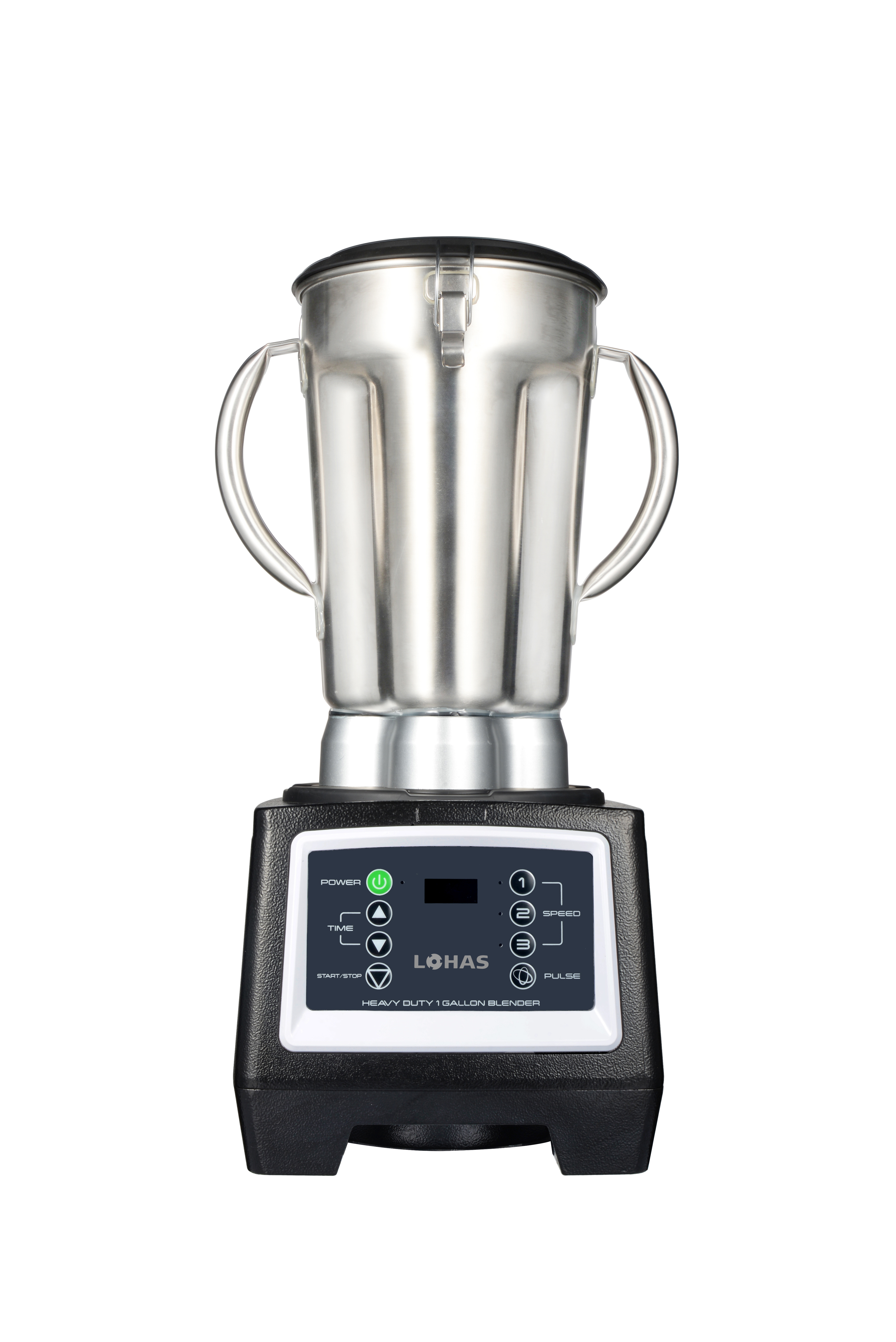
Understanding Commercial Blender Capacity Fundamentals
Volume Measurements and Standards
Commercial blender capacity is typically measured in liters, ounces, or quarts, with most professional units ranging from 32 ounces to over 128 ounces. Understanding these measurements helps you correlate container size with your specific production needs. A standard commercial blender often features capacities between 64 to 96 ounces, which translates to approximately 2 to 3 liters of blending volume. However, effective blending capacity differs from total container volume, as optimal performance requires leaving headspace for proper ingredient circulation.
The relationship between container shape and capacity significantly impacts blending efficiency. Wider containers accommodate larger batches but may require more powerful motors to achieve consistent results. Taller, narrower containers create better vortex action for smaller batches while maximizing vertical space in compact kitchens. Professional kitchens must balance container geometry with available counter space and storage requirements.
Capacity Classifications in Professional Settings
Commercial blenders are generally categorized into three capacity ranges: compact (32-48 ounces), standard (64-96 ounces), and large capacity (128+ ounces). Compact units serve specialized applications like single-serve smoothies or small-batch sauces, while standard capacity commercial blender models handle most general foodservice requirements. Large capacity units excel in high-volume operations, institutional settings, or establishments requiring batch preparation for extended service periods.
Each capacity classification serves distinct operational needs and comes with specific advantages and limitations. Compact units offer portability and energy efficiency but require frequent refilling for larger orders. Standard capacity models provide versatility and consistent performance across various applications. Large capacity commercial blenders maximize productivity but demand significant counter space and higher initial investment costs.
Operational Requirements and Volume Planning
Daily Volume Assessment
Accurately assessing your daily blending volume requirements forms the foundation for capacity selection. Document peak service periods, average order sizes, and seasonal fluctuations to establish baseline volume needs. A busy smoothie bar might process 200-300 individual servings daily, while a restaurant preparing sauces and soups requires different capacity considerations. Understanding your volume patterns helps determine whether multiple smaller units or fewer large-capacity blenders better serve your operation.
Consider future growth projections when evaluating volume requirements. A commercial blender investment should accommodate anticipated business expansion over three to five years. Underestimating future needs leads to premature equipment replacement, while overestimating results in unnecessary capital expenditure and operational inefficiencies. Strike a balance between current requirements and reasonable growth expectations.
Batch Size Optimization
Optimal batch sizing directly correlates with blender capacity and operational efficiency. Larger batches reduce preparation time and labor costs but may compromise ingredient freshness in operations with lower turnover. Smaller batches ensure fresher products but increase labor requirements and equipment wear from frequent operation. Commercial blender capacity should align with your optimal batch sizes to maximize efficiency while maintaining quality standards.
Different menu items require varying batch size strategies. Smoothies benefit from individual or small-batch preparation to maintain freshness and accommodate customization. Soups, sauces, and purees often work better with larger batches that can be portioned and stored appropriately. Your commercial blender capacity should accommodate the largest typical batch size while still performing effectively with smaller quantities when needed.
Matching Capacity to Specific Applications
Beverage Service Considerations
Beverage-focused operations require different capacity considerations compared to food preparation applications. Smoothie bars and juice shops typically benefit from moderate capacity commercial blender units that can produce 2-4 servings simultaneously while maintaining ingredient integrity. The ability to blend individual servings quickly often proves more valuable than processing large batches that may lose quality during storage.
Consider customer waiting times and order complexity when selecting beverage-specific capacity. A 64-ounce commercial blender can efficiently produce multiple smoothies while keeping preparation times reasonable during peak periods. However, establishments offering extensive customization options might benefit from multiple smaller units to maintain order accuracy and reduce cross-contamination risks between different flavor profiles.
Food Preparation and Processing Needs
Food preparation applications often require larger capacity commercial blender units to handle batch cooking requirements efficiently. Restaurants preparing soups, sauces, and purees benefit from 96-ounce or larger capacities that can process substantial quantities in single operations. This approach reduces preparation time, minimizes labor costs, and ensures consistency across large batches.
Different food applications place varying demands on blender capacity and performance. Thick mixtures like nut butters or heavy cream-based sauces require powerful motors regardless of capacity, while lighter applications like vegetable juices can achieve excellent results with moderate power levels. The relationship between capacity, motor power, and blade design significantly impacts processing efficiency for different food types.
Efficiency and Performance Factors
Motor Power Relationship to Capacity
The relationship between motor power and container capacity significantly impacts commercial blender performance and efficiency. Larger capacity containers require proportionally more powerful motors to maintain effective blending action throughout the entire volume. A 3-horsepower motor might excel with a 64-ounce container but struggle to process thick mixtures in a 128-ounce container effectively.
Understanding power-to-capacity ratios helps ensure optimal performance across different applications. High-capacity commercial blender units typically feature motors ranging from 3 to 5 horsepower to maintain consistent results with varying load sizes. Insufficient motor power relative to capacity leads to uneven blending, increased processing times, and premature motor wear from overexertion during demanding applications.
Speed and Processing Time Optimization
Blender capacity directly influences processing times and operational speed, affecting overall kitchen productivity. Larger capacity units can process more ingredients simultaneously but may require longer blending cycles to achieve uniform consistency. Smaller capacity commercial blender models typically achieve faster individual cycle times but require more frequent operation for equivalent total volumes.
Optimal processing speed depends on matching capacity to typical batch requirements and operational flow. A well-matched commercial blender completes most tasks within 60-90 seconds, maintaining productivity while ensuring quality results. Mismatched capacity and application requirements lead to extended processing times that create bottlenecks during peak service periods and reduce overall kitchen efficiency.
Space and Storage Considerations
Counter Space Requirements
Commercial blender capacity directly correlates with equipment footprint and counter space requirements. Larger capacity units demand more horizontal and vertical clearance, potentially limiting placement options in compact kitchen environments. Consider available counter space, ventilation requirements, and accessibility for cleaning and maintenance when evaluating capacity options.
Efficient space utilization requires balancing capacity needs with kitchen layout constraints. Multiple smaller commercial blender units might serve high-volume operations better than single large-capacity units in space-constrained environments. This approach provides operational flexibility, reduces single points of failure, and allows for dedicated units for different applications or contamination-sensitive ingredients.
Storage and Maintenance Access
Larger capacity commercial blender containers require more storage space and present unique cleaning and maintenance challenges. Consider storage requirements for multiple container sizes if your operation benefits from capacity flexibility. Adequate storage space near blending stations improves efficiency and reduces contamination risks during container exchanges.
Maintenance accessibility becomes increasingly important with larger capacity units due to their weight and size. Heavy containers require proper lifting techniques and potentially mechanical assistance to prevent staff injuries. Plan for adequate workspace around your commercial blender location to accommodate safe maintenance procedures and thorough cleaning protocols.
Cost Analysis and ROI Factors
Initial Investment Considerations
Commercial blender capacity significantly impacts initial purchase costs, with larger capacity units commanding premium prices due to increased material requirements and more powerful motor specifications. However, cost per ounce of capacity often decreases with larger units, making high-capacity models more economical for operations with substantial volume requirements.
Consider total cost of ownership beyond initial purchase price when evaluating capacity options. Larger capacity commercial blender units may offer better energy efficiency per unit volume processed, reducing long-term operating costs. Additionally, fewer units required for equivalent capacity reduces maintenance complexity and parts inventory requirements, contributing to lower total ownership costs over equipment lifespan.
Productivity and Labor Impact
Properly sized commercial blender capacity directly impacts labor efficiency and operational productivity. Optimal capacity selection reduces preparation time, minimizes equipment changeovers, and allows staff to focus on other value-added activities. Undersized capacity forces frequent batch preparation, increasing labor costs and potentially compromising service speed during peak periods.
Calculate potential labor savings when evaluating capacity investments. A commercial blender that reduces preparation time by 30 minutes daily translates to significant annual labor cost savings that can justify higher initial equipment costs. Consider both direct labor savings and indirect benefits like improved service consistency and reduced staff stress during busy periods.
FAQ
What is the most versatile capacity for a commercial blender
The most versatile capacity for a commercial blender typically falls between 64 to 96 ounces, offering an optimal balance between batch size flexibility and operational efficiency. This capacity range accommodates most foodservice applications while maintaining reasonable equipment footprint and cost requirements. These sizes work effectively for both individual serving preparation and moderate batch processing needs.
How does blender capacity affect ingredient processing quality
Blender capacity affects processing quality through ingredient circulation patterns and blade-to-ingredient ratios. Overfilled containers create poor circulation and uneven mixing, while underfilled large containers may not generate sufficient vortex action for optimal blending. The key is matching ingredient volume to approximately 60-80% of container capacity for best results with most commercial blender applications.
Should I choose one large capacity unit or multiple smaller ones
The choice between one large capacity commercial blender or multiple smaller units depends on your operational requirements and kitchen constraints. Multiple smaller units provide operational flexibility, reduce single points of failure, and allow simultaneous preparation of different products. However, single large-capacity units may offer better cost efficiency and require less counter space for equivalent total volume capacity.
How do I calculate the right capacity for my operation
Calculate the right capacity by analyzing your peak volume requirements, typical batch sizes, and service speed expectations. Document your busiest service periods and determine the maximum volume you need to process within specific time frames. Add 20-30% buffer capacity to accommodate growth and operational flexibility, ensuring your commercial blender can handle demand fluctuations without creating bottlenecks.