 EN
EN



Noise is one of the most overlooked yet operationally significant factors when selecting a commercial smoothie blender for a busy food service environment. Whether you run a juice bar, a café, a hotel breakfast station, or a high-volume restaurant, the acoustic output of your blending equipment directly affects customer experience, staff comfort, and even local noise compliance requirements. Understanding what drives blender noise and how to manage it is not a luxury consideration — it is a practical business necessity.
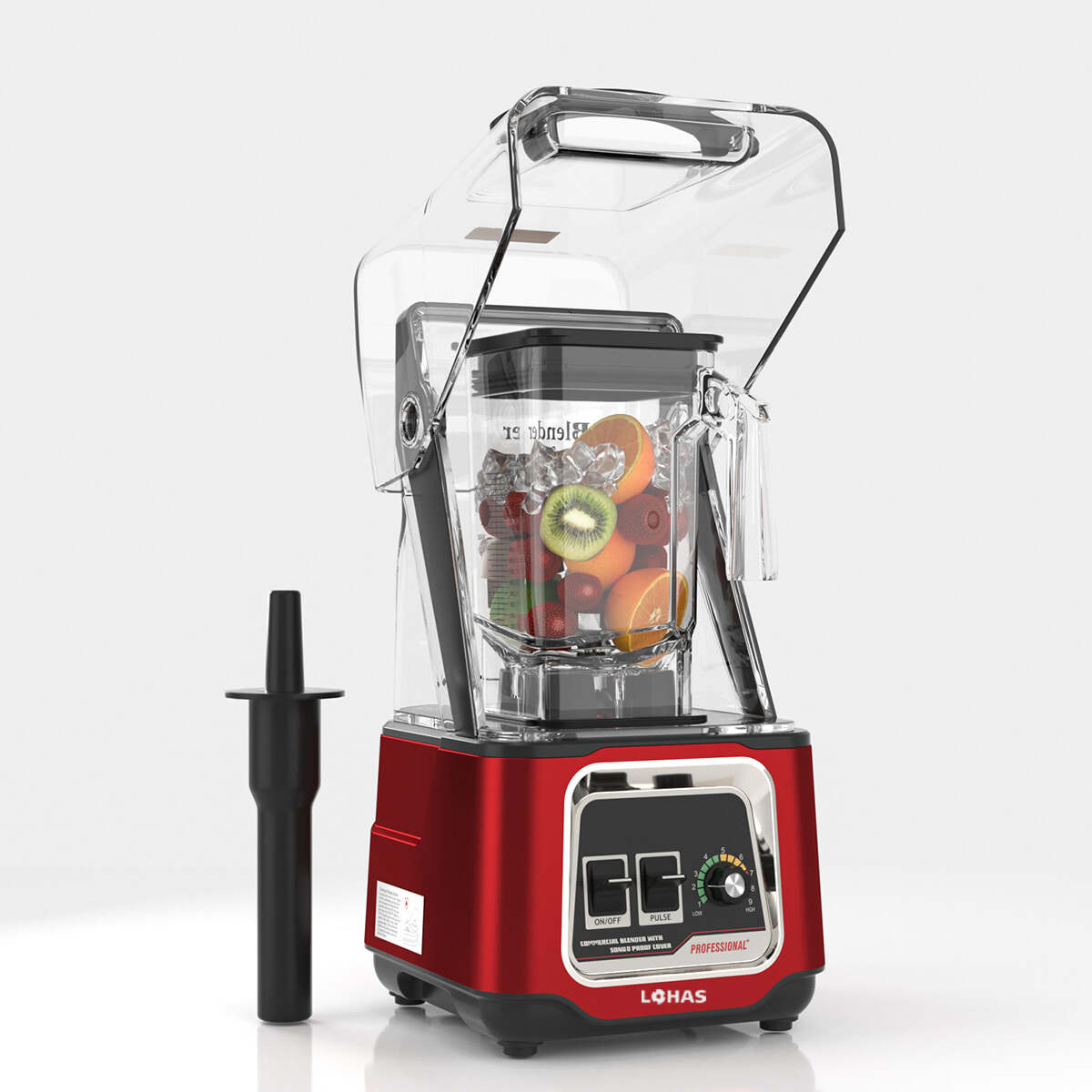
A commercial smoothie blender operates under far more demanding conditions than a household unit. Higher motor wattage, heavier blade assemblies, and continuous daily use cycles all contribute to elevated sound levels. This article breaks down the key noise considerations that operators and procurement managers should evaluate before investing in a commercial smoothie blender, covering the mechanical sources of noise, the role of sound enclosures, placement strategy, regulatory context, and long-term maintenance impact on acoustic performance.
The Mechanical Sources of Noise in a Commercial Smoothie Blender
Motor Power and Rotational Speed
The motor is the primary noise-generating component in any commercial smoothie blender. Commercial-grade motors typically range from 1,000 to over 3,500 watts, and the rotational speed of the blade assembly can exceed 30,000 RPM in high-performance models. At these speeds, the motor itself produces a continuous high-frequency hum, while the mechanical interaction between the motor shaft and the blade coupling generates additional vibration-based noise.
The relationship between motor power and noise is not strictly linear. A well-engineered commercial smoothie blender with a high-torque, lower-RPM motor can process dense ingredients more quietly than a lower-torque unit that must spin faster to achieve the same result. This is why raw wattage alone is not a reliable predictor of noise output — motor design, bearing quality, and shaft balance all play equally important roles.
Operators should look for commercial smoothie blender models that specify noise output in decibels (dB) rather than relying solely on power ratings. A unit rated at 88 dB will feel dramatically different in a customer-facing environment compared to one rated at 75 dB, even if both deliver comparable blending performance.
Blade Assembly Dynamics and Cavitation
The blade assembly is the second major source of noise in a commercial smoothie blender. As blades rotate at high speed through liquid and solid ingredients, they create turbulence, impact noise from contact with hard ingredients like ice or frozen fruit, and a phenomenon known as cavitation — the rapid formation and collapse of vapor bubbles in the liquid. Cavitation produces a distinctive rattling or crackling sound that can be particularly pronounced when blending ice-heavy recipes.
Blade geometry significantly influences how much noise a commercial smoothie blender generates during operation. Wider, flatter blades tend to create more turbulence and cavitation noise, while narrower, angled blade designs can channel ingredients more efficiently and reduce acoustic output. The material and thickness of the blade also affect the resonance characteristics of the assembly — heavier stainless steel blades with precision balancing produce less vibration-induced noise than lighter, less precisely manufactured alternatives.
Container design interacts closely with blade dynamics. A commercial smoothie blender jar with a tapered base and strategically positioned internal ridges can redirect ingredient flow in ways that reduce cavitation and impact noise, effectively acting as a passive acoustic management feature built into the container itself.
Sound Enclosures and Their Role in Noise Reduction
How Sound Enclosures Work
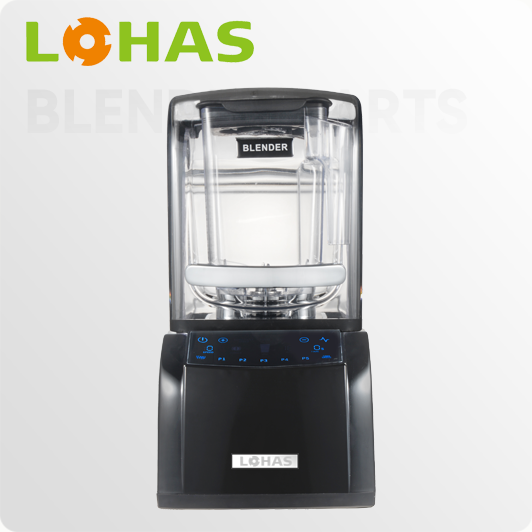
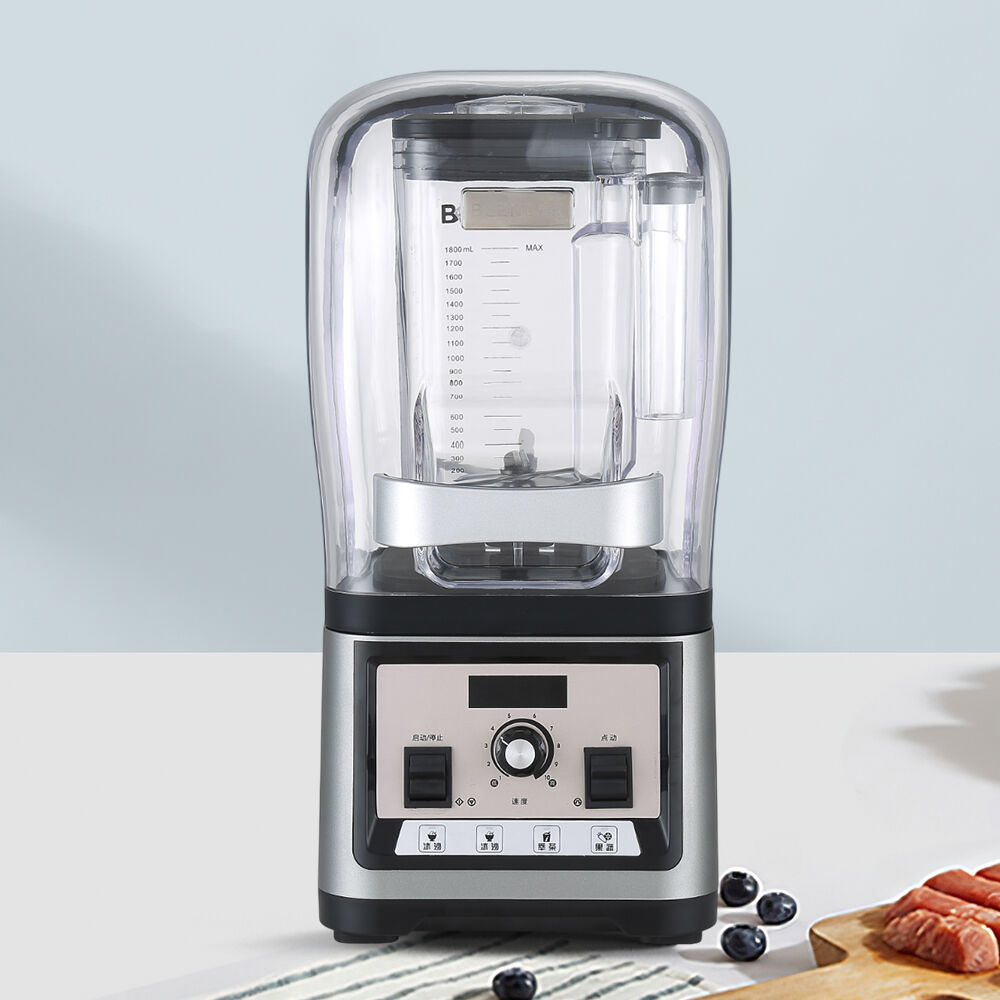
A sound enclosure, sometimes called a noise shield or sound dome, is a cover that fits over the blending jar during operation to contain and absorb acoustic energy before it reaches the surrounding environment. For any commercial smoothie blender deployed in a customer-facing setting, a sound enclosure is not optional — it is a fundamental component of responsible equipment selection.
Sound enclosures work through a combination of mass, absorption, and damping. The outer shell of the enclosure reflects sound waves back toward the source, while internal lining materials — typically dense foam or composite acoustic panels — absorb the reflected energy and convert it into negligible heat. The net effect is a reduction of 10 to 20 dB in perceived noise, which translates to a subjective experience of the blender being two to four times quieter to the human ear.
Not all sound enclosures are equally effective. The fit between the enclosure and the base of the commercial smoothie blender is critical — any gap allows sound to escape and significantly reduces the enclosure's effectiveness. Operators should verify that the enclosure is specifically designed for their blender model rather than using a generic aftermarket solution that may not seal properly.
Integrated vs. Aftermarket Enclosure Solutions
Some commercial smoothie blender models are engineered with integrated sound dampening built directly into the motor housing and base unit, in addition to or instead of a separate enclosure. These integrated solutions typically use vibration-absorbing feet, internally lined motor compartments, and resonance-dampening materials bonded to the outer casing. The advantage of this approach is that noise reduction is consistent across all operating conditions without requiring the operator to remember to use a separate enclosure.
Aftermarket enclosures offer flexibility for operations that have already invested in a commercial smoothie blender without built-in dampening. However, the effectiveness of aftermarket solutions varies considerably, and operators should test them under real operating conditions before committing to a purchase. Some aftermarket enclosures also add significant counter space requirements, which can be a constraint in compact bar or café environments.
The most acoustically optimized commercial smoothie blender configurations combine both approaches — an integrated dampening base with a well-fitted sound enclosure — to achieve the lowest possible operational noise levels without compromising blending performance or workflow speed.
Placement Strategy and Environmental Noise Management
Counter Placement and Surface Transmission
Where a commercial smoothie blender is positioned within a workspace has a measurable impact on how much noise reaches customers and staff. Hard, reflective surfaces such as stainless steel countertops, tiled walls, and glass partitions amplify and scatter sound waves, making the blender seem louder than its measured dB output would suggest. Placing a commercial smoothie blender directly against a hard wall creates a reflective boundary that can increase perceived noise by several decibels.
Anti-vibration mats placed under the blender base are a simple and cost-effective way to reduce structure-borne noise transmission through the counter surface. These mats decouple the blender's vibration from the counter, preventing the counter itself from acting as a resonating amplifier. For high-volume operations running a commercial smoothie blender continuously throughout service periods, this small investment can meaningfully reduce cumulative noise fatigue for staff.
Positioning the commercial smoothie blender away from direct customer interaction zones — such as order counters or seating areas — is a straightforward spatial strategy that reduces the subjective noise impact without requiring any equipment modification. Even a distance of one to two meters can reduce perceived loudness by 6 dB or more, depending on the acoustic characteristics of the space.
Acoustic Environment Design for High-Volume Operations
In high-volume juice bars or smoothie-focused concepts where a commercial smoothie blender is in near-constant operation, broader acoustic environment design becomes relevant. Soft furnishings, acoustic ceiling panels, and sound-absorbing wall treatments all contribute to reducing the overall noise level in the space, making the blender's contribution less perceptible relative to the ambient sound environment.
Some operators designate a semi-enclosed blending station — a recessed counter area or a partial partition — specifically to contain blending noise without fully separating the preparation area from the service flow. This approach allows staff to maintain visual contact with customers while significantly reducing the direct line-of-sight sound transmission from the commercial smoothie blender to the customer-facing area.
Acoustic environment planning is particularly important for hotel lobby cafés, airport lounges, and premium dining environments where ambient noise standards are higher and customer tolerance for operational sounds is lower. In these contexts, the noise profile of a commercial smoothie blender should be evaluated as part of the overall interior acoustic design, not as an isolated equipment specification.
Regulatory and Compliance Considerations
Workplace Noise Exposure Standards
Occupational health regulations in many jurisdictions set limits on the noise levels that workers can be exposed to over an eight-hour shift without hearing protection. In the United States, OSHA sets the permissible exposure limit at 90 dB averaged over eight hours, with a recommended action level of 85 dB. A commercial smoothie blender operating without a sound enclosure can easily exceed 85 dB at the operator's position, particularly during ice blending cycles.
For operations where staff are stationed near a commercial smoothie blender for extended periods, compliance with workplace noise standards is not merely a regulatory formality — it is a genuine occupational health obligation. Selecting a commercial smoothie blender with a certified low-noise rating and pairing it with an effective sound enclosure is the most reliable way to keep operator exposure within safe limits without requiring hearing protection equipment.
Some commercial smoothie blender manufacturers provide third-party certified noise measurements conducted under standardized test conditions. These certifications offer a more reliable basis for compliance planning than manufacturer-stated specifications, which may be measured under idealized conditions that do not reflect real-world operational noise levels.
Local Noise Ordinances and Customer-Facing Environments
Beyond workplace standards, some municipalities have noise ordinances that apply to commercial premises, particularly those operating in mixed-use or residential-adjacent zones. A commercial smoothie blender operating near an open service window or in a street-facing kiosk may be subject to these ordinances, especially during early morning or late evening hours.
Operators planning new food service concepts should verify local noise requirements before finalizing equipment specifications. Selecting a commercial smoothie blender with documented low-noise performance from the outset is far more cost-effective than retrofitting noise management solutions after a complaint or inspection has identified a compliance issue.
Customer perception of noise is also a soft compliance consideration. Even where no formal regulation applies, excessive blending noise can negatively affect customer satisfaction scores, dwell time, and repeat visit rates — particularly in premium or wellness-oriented concepts where the brand promise includes a calm, comfortable environment.
Maintenance Impact on Long-Term Noise Performance
Bearing Wear and Vibration Escalation
A commercial smoothie blender that operates quietly when new can become significantly noisier over time if maintenance is neglected. The motor bearings are the component most directly responsible for this degradation. As bearings wear, they introduce play into the motor shaft, which causes the blade assembly to run slightly off-center. This imbalance generates vibration that increases exponentially with rotational speed, producing a characteristic grinding or rattling noise that worsens progressively.
Scheduled bearing inspection and replacement is the most effective preventive maintenance measure for preserving the acoustic performance of a commercial smoothie blender. The replacement interval depends on usage intensity, but high-volume operations blending 100 or more cycles per day should plan for bearing inspection at least every six months. Catching bearing wear early prevents the secondary damage to motor windings and blade couplings that can result from extended operation with a worn bearing.
Operators should also monitor for changes in the sound profile of their commercial smoothie blender as an early warning system. A sudden increase in noise level, a change in the pitch or character of the operating sound, or the appearance of new vibration through the counter surface are all signals that warrant immediate inspection rather than continued operation.
Blade and Jar Maintenance for Acoustic Consistency
Blade dulling and jar degradation also contribute to noise escalation in a commercial smoothie blender over time. Dull blades require more motor torque to process ingredients, which increases motor load and the associated acoustic output. They also create more turbulent, inefficient ingredient flow that amplifies cavitation noise. Regular blade inspection and timely replacement maintains both blending performance and noise levels within the original design parameters.
Polycarbonate or Tritan blending jars can develop micro-scratches and stress fractures with heavy use, which alter the resonance characteristics of the container and can increase the noise transmitted through the jar walls. Replacing jars at the manufacturer's recommended interval — or sooner if visible wear is apparent — is a straightforward maintenance step that supports consistent acoustic performance from a commercial smoothie blender.
Keeping the sound enclosure clean and intact is equally important. Cracks, warping, or missing internal lining material in the enclosure reduce its sound absorption effectiveness and allow more noise to escape during operation. Treating the enclosure as a maintenance item rather than a permanent fixture ensures that the noise management system continues to perform as intended throughout the equipment's service life.
FAQ
What decibel level should I look for in a commercial smoothie blender for a café environment?
For a customer-facing café environment, a commercial smoothie blender with a sound enclosure should ideally operate at or below 75 dB at one meter distance. Without an enclosure, most commercial units operate between 85 and 95 dB, which is disruptive in a quiet café setting. Always request certified noise measurements rather than relying solely on manufacturer marketing claims.
Does a sound enclosure affect the blending performance of a commercial smoothie blender?
A properly designed sound enclosure does not reduce the blending performance of a commercial smoothie blender. The enclosure contains acoustic energy without restricting airflow to the motor or limiting the mechanical operation of the blade assembly. Some enclosures include ventilation channels specifically designed to maintain motor cooling while still providing effective noise containment.
How often should I replace the blades on a commercial smoothie blender to maintain low noise levels?
In high-volume operations, blade replacement every three to six months is a reasonable baseline, though the exact interval depends on the types of ingredients processed and the number of daily cycles. Blending hard ingredients like ice, frozen fruit, and nuts accelerates blade wear. Monitoring for increased noise, reduced blending efficiency, or visible blade edge degradation provides more reliable replacement timing than a fixed schedule alone.
Can the placement of a commercial smoothie blender on the counter really make a noticeable difference in noise levels?
Yes, placement has a measurable effect. Using an anti-vibration mat under the base of a commercial smoothie blender can reduce structure-borne noise transmission by several decibels. Moving the unit away from hard reflective surfaces and positioning it further from customer interaction zones can reduce perceived loudness significantly. These are low-cost, immediately actionable steps that complement equipment-level noise management measures.
Table of Contents
- The Mechanical Sources of Noise in a Commercial Smoothie Blender
- Sound Enclosures and Their Role in Noise Reduction
- Placement Strategy and Environmental Noise Management
- Regulatory and Compliance Considerations
- Maintenance Impact on Long-Term Noise Performance
-
FAQ
- What decibel level should I look for in a commercial smoothie blender for a café environment?
- Does a sound enclosure affect the blending performance of a commercial smoothie blender?
- How often should I replace the blades on a commercial smoothie blender to maintain low noise levels?
- Can the placement of a commercial smoothie blender on the counter really make a noticeable difference in noise levels?