 EN
EN



In a high-volume foodservice environment, a commercial smoothie blender is only as valuable as its ability to stay clean, sanitary, and ready for the next order. When dozens or even hundreds of blends happen in a single shift, cleaning speed and thoroughness are not minor conveniences — they are operational necessities. A machine that is difficult to clean slows down service, increases labor costs, and raises genuine food safety concerns that no business can afford to overlook.
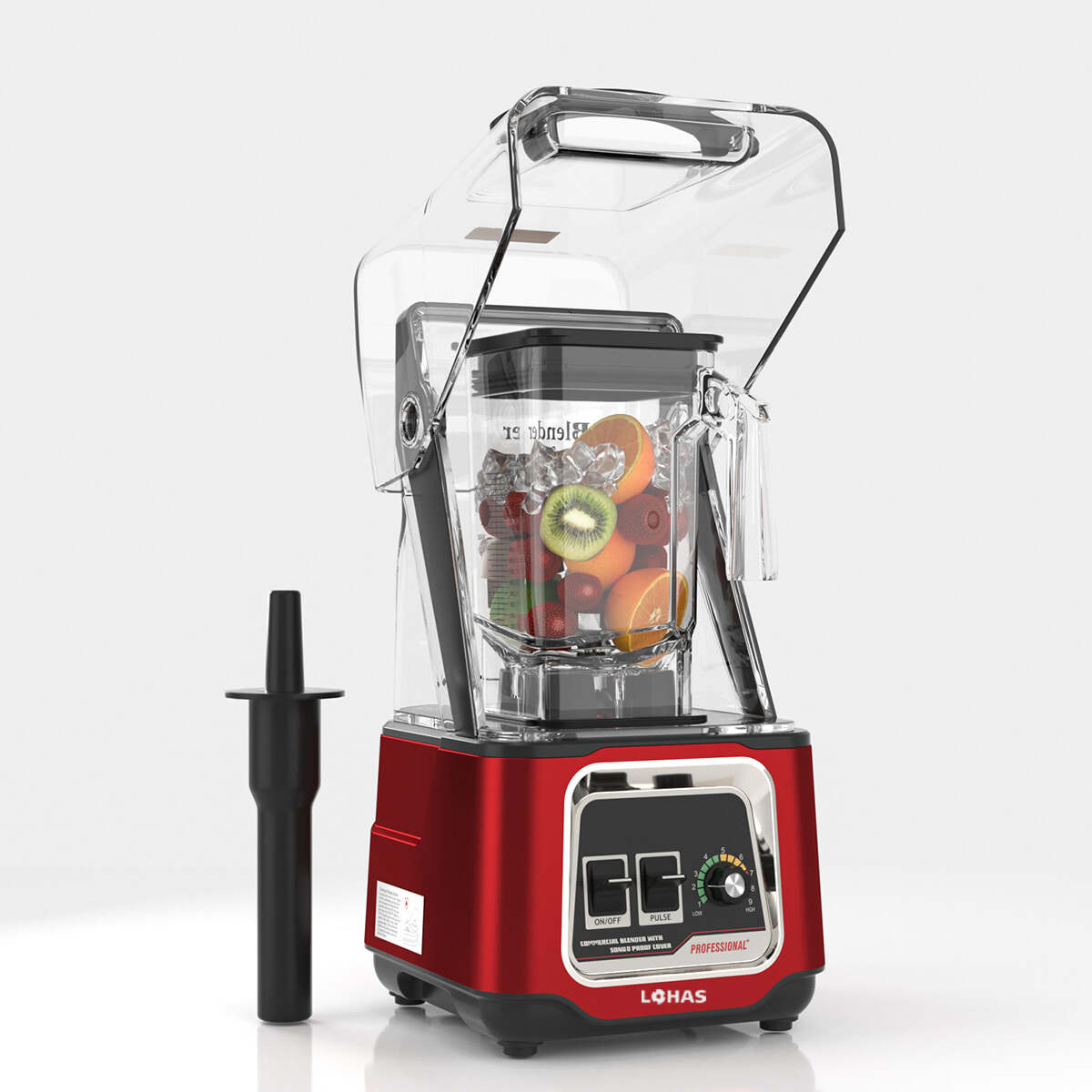
Understanding which cleaning features genuinely matter when selecting a commercial smoothie blender can save operators significant time and money over the long run. Not all cleaning-friendly designs are created equal, and the differences between a truly easy-to-clean machine and one that merely claims to be can become very apparent during a busy service period. This article breaks down the specific cleaning features that distinguish a practical commercial smoothie blender from one that becomes a liability in a working kitchen.
Why Cleaning Efficiency Directly Impacts Blender Performance
The Link Between Hygiene and Product Quality
When residue from a previous blend is not fully removed, it contaminates the next batch. In a commercial smoothie blender used across multiple flavor profiles — from tropical fruit blends to nut-based smoothies — cross-contamination is not just a taste issue, it is a potential allergen risk. Customers with dietary restrictions depend on operators to maintain clean equipment between every single use.
Even microscopic dairy or nut residue left in a blending container or around blade assemblies can trigger allergic reactions in sensitive individuals. Thorough and consistent cleaning is therefore directly tied to customer safety, which in turn affects brand reputation. A commercial smoothie blender that makes this process fast and reliable supports both safety and quality simultaneously.
Beyond allergen concerns, residue buildup accelerates bacterial growth, especially in warm kitchen environments. A commercial smoothie blender that is difficult to disassemble or has recessed areas that trap food particles creates conditions where microbial contamination becomes a serious risk. Clean equipment is fundamentally productive equipment.
Cleaning Time as an Operational Cost Factor
In a busy smoothie bar or café, staff time is a finite resource. Every additional minute spent on cleaning a commercial smoothie blender between orders adds up across a full shift. If the cleaning cycle takes two extra minutes per blend cycle, that adds over an hour of labor time during a 40-blend shift — a meaningful cost that compounds daily.
Operators who have evaluated multiple machines consistently report that the ease of cleaning is one of the top factors influencing long-term satisfaction with a commercial smoothie blender. Equipment that incorporates purpose-built cleaning features dramatically reduces per-cycle cleaning time, allowing staff to keep service moving without cutting corners on sanitation.
Key Design Features That Simplify the Cleaning Process
Self-Cleaning Rinse Cycles
One of the most practical features available on a modern commercial smoothie blender is a dedicated self-cleaning or rinse cycle. This function typically involves adding a small amount of water to the container and running a brief, automated blend cycle that flushes residue from the blades and interior walls. The entire process takes under a minute and requires minimal staff involvement.
The value of this feature in a high-throughput setting cannot be overstated. A self-cleaning cycle on a commercial smoothie blender essentially eliminates the need to disassemble and hand-scrub between every single use. It maintains baseline cleanliness during peak hours while allowing for a more thorough cleaning to occur at the end of service.
When evaluating a commercial smoothie blender, operators should assess how the self-cleaning function performs with thick, fibrous blends such as those involving frozen fruit, dates, or nut butters. Some designs handle these residues more effectively than others, and testing this under realistic conditions reveals a lot about the machine's practical utility.
Removable and Dishwasher-Safe Components
The ability to fully disassemble a commercial smoothie blender and run its components through a commercial dishwasher is a significant operational advantage. Containers, lids, and blade assemblies that are rated for commercial dishwasher use allow for thorough overnight cleaning without hand-scrubbing, which saves labor and ensures consistent sanitation.
Look for blade assemblies that detach cleanly and without tools, as this allows kitchen staff to clean them safely and quickly. Sharp blades that require tools for removal or that cannot be fully submerged represent a cleaning challenge in a fast-paced environment. A well-designed commercial smoothie blender addresses this by making the blade assembly intuitive to remove and reinstall.
Container materials also matter in this context. Polycarbonate or BPA-free Tritan containers are commonly used in commercial smoothie blender designs because they resist staining, do not retain odors, and can withstand repeated high-temperature dishwasher cycles without degrading. Operators should confirm material specifications before purchasing to ensure long-term durability of these components.
Container Geometry and Surface Design for Cleanliness
Interior Surface Smoothness and Shape
The internal geometry of a commercial smoothie blender container has a direct impact on how easily it can be cleaned. Containers with smooth, curved interiors and no sharp internal corners allow water and cleaning solutions to flow freely, removing residue without requiring manual scrubbing into tight spaces. Conversely, containers with recessed grooves, branding embossments, or irregular internal shapes tend to trap food particles.
High-quality designs in the commercial smoothie blender category typically feature seamless interiors where the transition between the container wall and the base is smooth and uninterrupted. This is especially important near the blade assembly, where dense residue from seeds, fibrous pulp, and frozen ingredients tends to accumulate during blending.
Operators managing multi-station setups should pay particular attention to container uniformity. When every commercial smoothie blender unit uses identical containers, staff can follow a standardized cleaning procedure without needing to adjust for different designs, which reduces errors and improves overall kitchen hygiene compliance.
Lid Design and Seal Integrity
Lids on a commercial smoothie blender often have more complex geometry than containers, incorporating vents, plugs, and inner channels that can trap liquid and residue. A lid design that is difficult to fully clean can become a source of off-odors and microbial buildup even if the container itself is cleaned perfectly after each use.
The best commercial smoothie blender lids are engineered with a minimal number of internal channels, a single removable plug or cap, and a smooth underside that rinses easily. Lids that can be fully disassembled into two or three simple components are far easier to clean than single-piece lids with complex internal routing designed primarily for splash prevention.
Seal integrity is equally important. A commercial smoothie blender lid that seals tightly during operation but disengages easily and completely for cleaning represents the ideal balance between operational safety and cleaning convenience. Over time, lids with degraded seals can allow liquids to seep into crevices that are impossible to access without disassembly.
Motor Base Maintenance and Exterior Cleaning
Spill-Resistant Motor Base Design
While most attention in cleaning discussions focuses on the container and blades, the motor base of a commercial smoothie blender also requires regular attention. Spills from overfilled containers, condensation from cold blends, and general kitchen splatter accumulate on and around the motor base throughout a service period.
A commercial smoothie blender with a sealed, spill-resistant motor housing protects internal electrical components from moisture damage while simplifying exterior cleaning. Smooth, non-porous surfaces on the base unit can be wiped down quickly with a damp cloth and food-safe sanitizer, while textured or ventilated surfaces accumulate debris that requires more intensive cleaning effort.
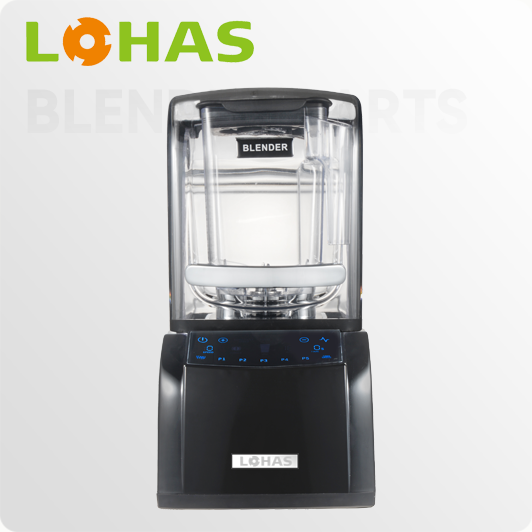
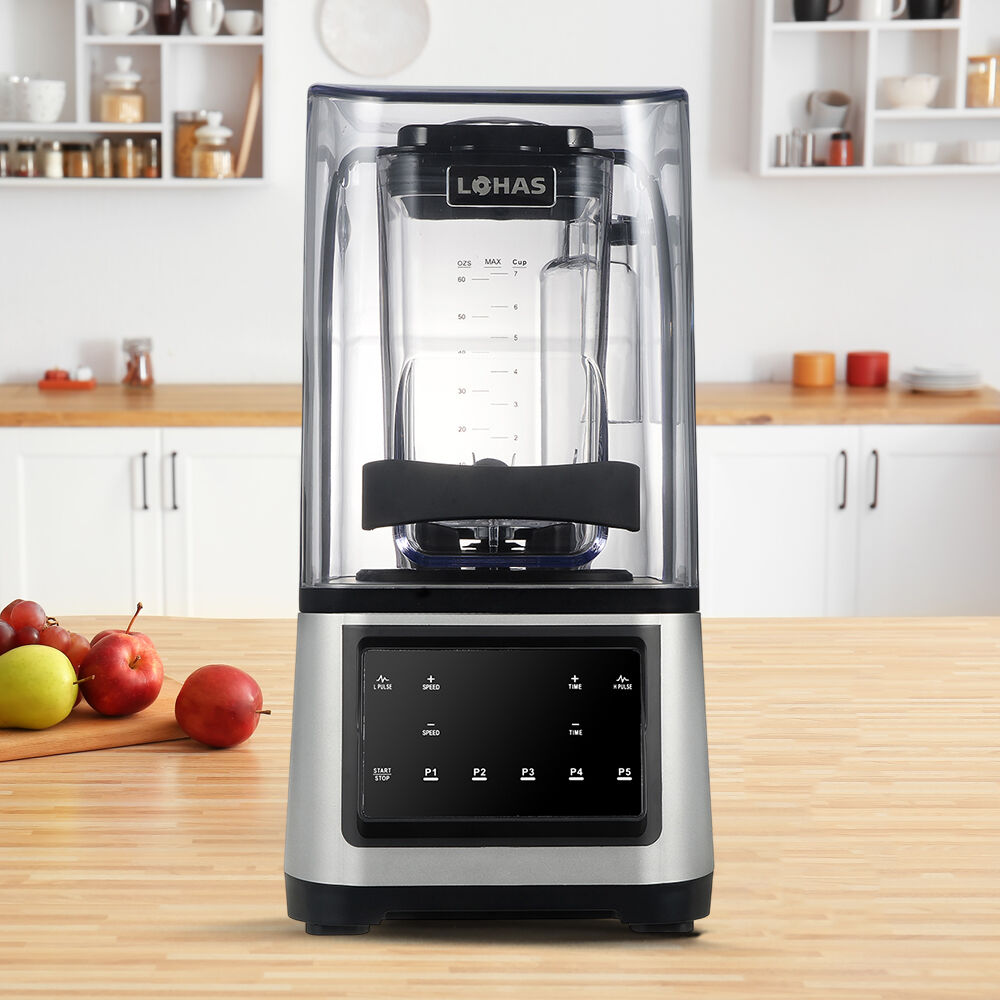
Some commercial smoothie blender models feature a sound enclosure or blending jar cage that fits over the container during operation. While these enclosures serve primarily to reduce noise, they also contain splatter. However, they add a cleaning step — the enclosure itself must be wiped down regularly — so designs that balance containment with easy-access cleaning are preferable in high-volume environments.
Control Panel and Interface Hygiene
The control panel of a commercial smoothie blender is one of the most frequently touched surfaces in a kitchen, yet it is often overlooked in cleaning routines. Buttons, dials, and touchscreens accumulate oils, food residue, and bacteria from repeated handling, making interface hygiene an important consideration.
Sealed, flat-surface control panels are significantly easier to sanitize than recessed button designs where liquid and residue collect around the edges of each control. A commercial smoothie blender with a membrane-style or flush touchpad interface allows staff to wipe the entire control surface with a single pass of a sanitizing cloth, without needing to clean around individual button edges.
Operators should also consider the placement of the control panel relative to the blending area. Panels positioned directly below the container contact zone are more likely to receive spill exposure. A commercial smoothie blender with a thoughtfully positioned and sealed interface reduces this risk and simplifies the overall cleaning workflow during and after service.
FAQ
How often should a commercial smoothie blender be fully cleaned during a shift?
In a high-volume environment, a commercial smoothie blender should receive a rinse cycle between every blend to prevent cross-contamination, with a more thorough cleaning — including container removal and blade disassembly — performed at least once mid-shift and again at the end of each day. The frequency may increase depending on the types of ingredients being blended, particularly when switching between allergen-containing and allergen-free recipes.
Are all commercial smoothie blender containers dishwasher safe?
Not all commercial smoothie blender containers are rated for commercial dishwasher use. It is important to verify the material specifications with the manufacturer before placing containers in a high-temperature commercial dishwasher cycle. Tritan and certain polycarbonate materials are commonly dishwasher safe, but some acrylic containers may warp or degrade under repeated high-heat exposure. Always confirm compatibility before establishing a cleaning routine.
What is the best way to remove stubborn residue from a commercial smoothie blender container?
For stubborn residue left by fibrous ingredients, frozen fruits, or nut-based blends, the most effective approach is to fill the commercial smoothie blender container with warm water and a small amount of dish soap, then run a full blend cycle for 30 to 60 seconds. This creates a soapy vortex that dislodges adhered particles from the interior walls and blade area. Follow with a clean water rinse cycle and allow the container to air dry or dry with a clean cloth before reassembly.
Does a sound enclosure make a commercial smoothie blender harder to clean?
A sound enclosure does add one additional surface to the cleaning routine for a commercial smoothie blender, but many modern designs account for this by using smooth, wipe-clean interior surfaces within the enclosure. The enclosure itself generally does not come into direct contact with food, so a quick wipe-down with a sanitizing cloth is typically sufficient. The tradeoff in noise reduction and splatter containment is generally considered worthwhile in most commercial settings.
Table of Contents
- Why Cleaning Efficiency Directly Impacts Blender Performance
- Key Design Features That Simplify the Cleaning Process
- Container Geometry and Surface Design for Cleanliness
- Motor Base Maintenance and Exterior Cleaning
-
FAQ
- How often should a commercial smoothie blender be fully cleaned during a shift?
- Are all commercial smoothie blender containers dishwasher safe?
- What is the best way to remove stubborn residue from a commercial smoothie blender container?
- Does a sound enclosure make a commercial smoothie blender harder to clean?