 EN
EN


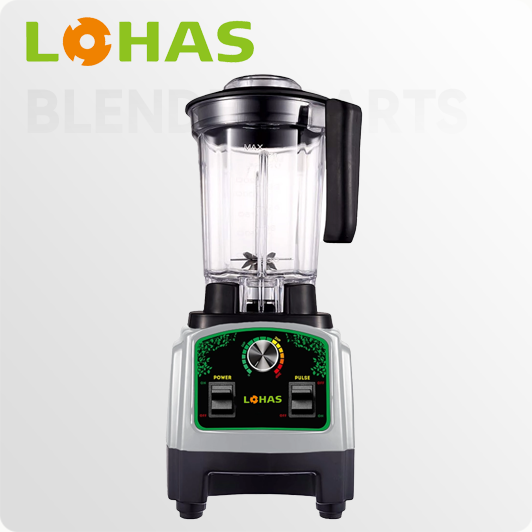
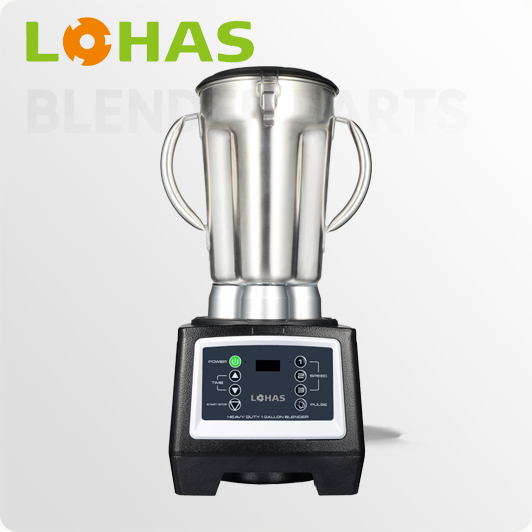
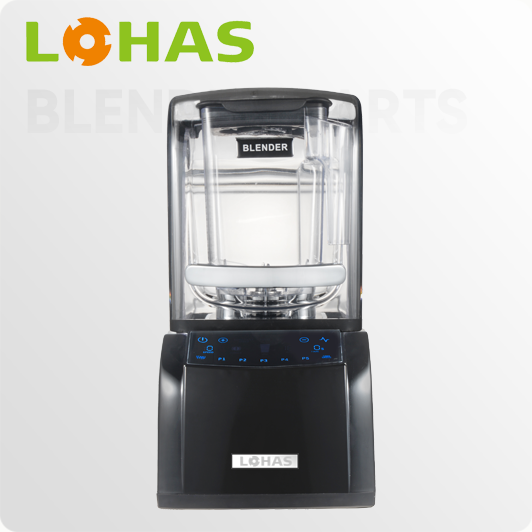

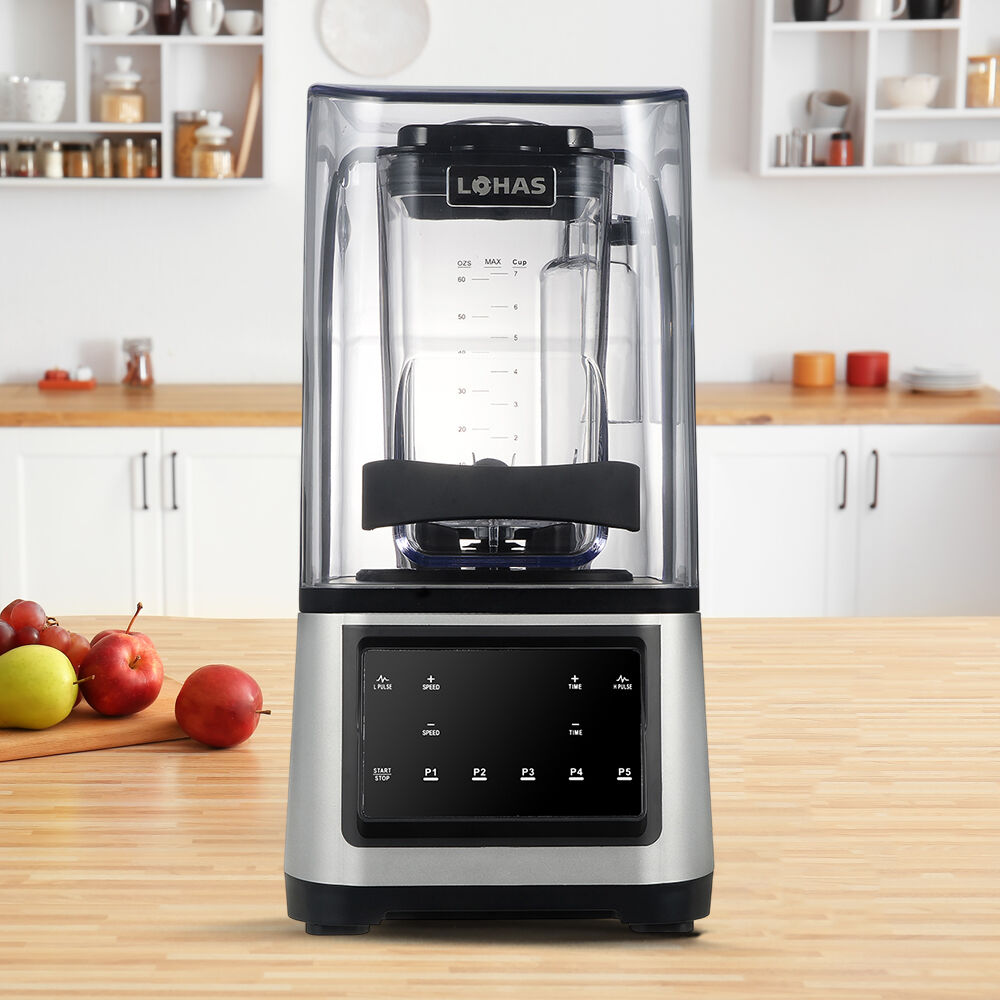
In high-volume foodservice environments, the ability to deliver a perfectly smooth, consistent product every single time is not a luxury — it is an operational necessity. A commercial smoothie blender is engineered to meet this demand through a combination of motor power, blade geometry, and variable speed control that consumer-grade appliances simply cannot replicate. Whether you are running a busy juice bar, a hospital cafeteria, or a high-traffic café, the equipment you choose directly determines the quality, speed, and profitability of every drink you serve.
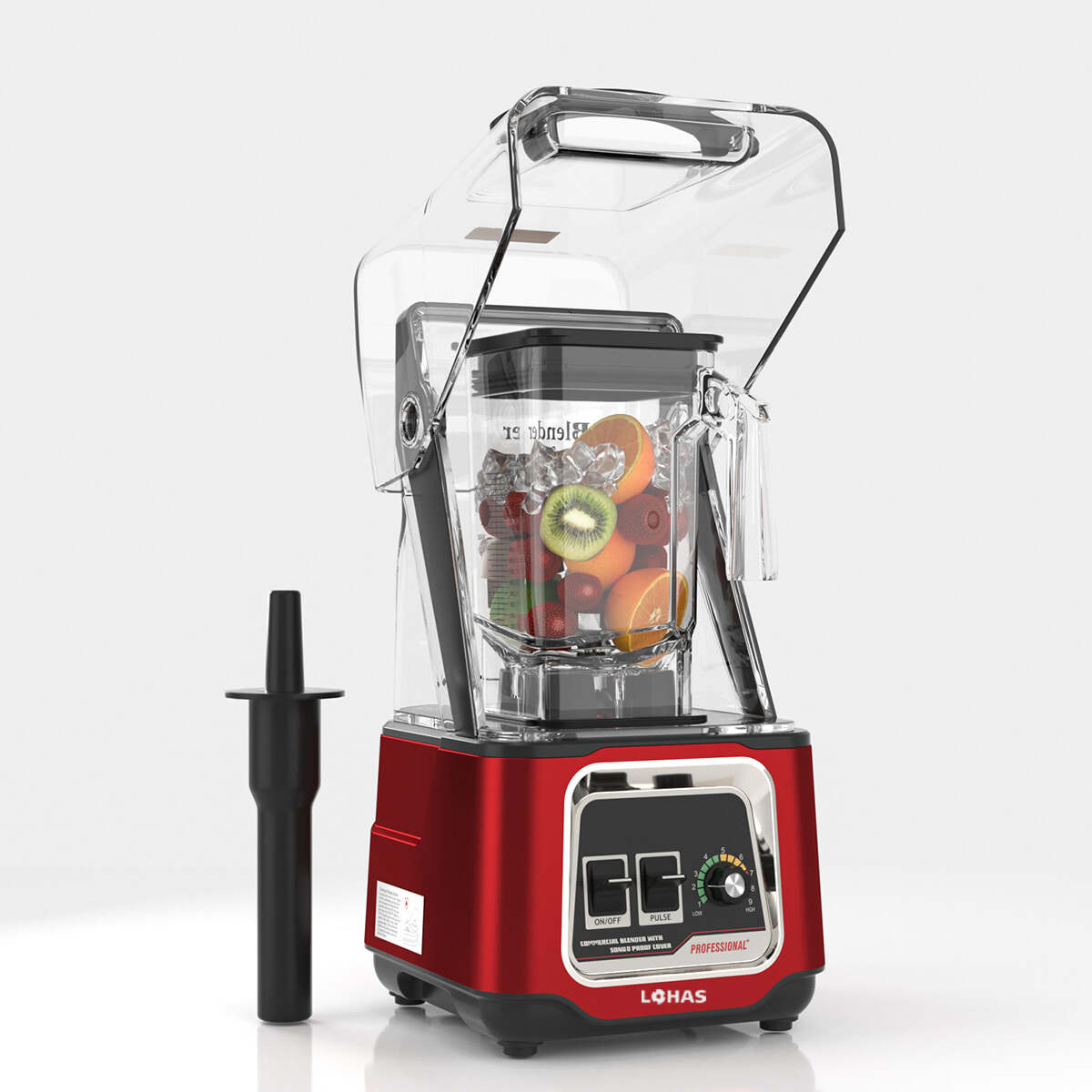
Speed settings and texture consistency are two of the most critical performance pillars of any commercial smoothie blender, and the relationship between them is more nuanced than most operators realize. Getting this relationship right means understanding how blending cycles work, what role motor torque plays at different RPM ranges, and why certain ingredients demand specific speed profiles to achieve the ideal mouthfeel. This article breaks down the mechanics, the practical implications, and the operational decisions that help foodservice businesses extract the most value from their blending equipment.
The Role of Speed Control in a Commercial Smoothie Blender
Variable Speed vs. Fixed Speed Blending
Not all commercial smoothie blender models offer the same level of speed control, and this distinction has a significant impact on both texture quality and ingredient versatility. Fixed-speed blenders operate at a single, maximum RPM from the moment the motor engages. While this approach works reasonably well for simple, soft-ingredient recipes, it often over-processes certain components or fails to build the layered blending action needed for thick, fibrous mixtures.
Variable speed control, by contrast, gives operators the ability to modulate RPM progressively throughout the blend cycle. Starting at a lower speed allows larger frozen chunks or dense leafy greens to be drawn into the blade zone gradually, reducing strain on the motor and ensuring that every ingredient gets evenly processed before the speed ramps up for final smoothing. This approach is standard in professional-grade commercial smoothie blender equipment designed for consistency under heavy use.
The practical outcome is clear: a variable-speed commercial smoothie blender produces fewer air pockets, fewer unblended chunks, and a more uniform texture across every serving. For businesses where a single poorly blended drink can generate a customer complaint or a returned order, this level of control is essential.
RPM Ranges and Ingredient Behavior
Understanding RPM ranges helps operators match their commercial smoothie blender settings to specific recipe requirements. At lower speeds, roughly 5,000 to 10,000 RPM, the blender begins breaking down large pieces without generating excessive heat or over-aerating the mixture. This range is ideal for the initial processing of frozen fruit, ice, and hard vegetables.
Mid-range speeds, typically between 12,000 and 18,000 RPM, handle the bulk of the blending work. This is where fibrous ingredients like kale, spinach, and raw beets are reduced to a smooth, integrated consistency. A well-designed commercial smoothie blender with a powerful motor maintains torque consistently at these speeds, even when the container is loaded to full capacity.
At high speeds above 20,000 RPM, the blade system creates a vortex that pulls all remaining particles toward the center for final micro-processing. This is what separates a truly smooth, professional-quality result from one that feels slightly gritty or fibrous. The ability of a commercial smoothie blender to sustain these speeds under load — without the motor slowing or overheating — defines its suitability for peak service hours.
Texture Consistency and What Actually Controls It
Blade Design and Its Impact on Final Texture
Speed alone does not guarantee texture consistency in a commercial smoothie blender. The blade assembly plays an equally critical role in determining how ingredients interact during the blend cycle. Professional blades are typically engineered with a specific pitch, angle, and surface area that creates a controlled downward flow, pulling ingredients into the cutting zone and cycling them repeatedly through the blade path.
Blades designed for high-volume commercial smoothie blender applications are made from hardened stainless steel and are shaped to handle both wet and dry blending scenarios. The number of blade tips, their curvature, and the gap between the blade edge and the container wall all influence how efficiently kinetic energy is transferred to the ingredients. A poorly designed blade assembly can spin at maximum RPM and still produce an inconsistent texture because it is not moving ingredients through the cutting zone efficiently.
For operators focused on texture repeatability — meaning every smoothie served to a customer feels and tastes the same — blade design is not a secondary consideration. It is a primary one. Choosing a commercial smoothie blender with a purpose-built blade system for dense, mixed-ingredient recipes directly supports the consistency that both staff and customers expect.
Container Shape and Vortex Formation
The geometry of the blending container has a direct and measurable effect on texture consistency in a commercial smoothie blender. Containers with a wider base and a tapered upper profile encourage a natural vortex pattern, drawing ingredients down from the sides and through the blade zone in a circular, repeating flow. This continuous circulation is what prevents pockets of unblended material from forming near the container walls.
Square or asymmetric container designs introduce deliberate disruptions to this vortex. Rather than a smooth, even rotation, ingredients are interrupted mid-flow and redirected, creating additional shear forces that break down tough fibers and cell walls more effectively. Many professional commercial smoothie blender models use this approach to improve nutrient extraction and achieve a creamier mouthfeel without requiring longer blend cycles.
The material of the container also matters. Polycarbonate containers resist impact and maintain optical clarity, allowing staff to visually monitor blend progress. BPA-free Tritan containers offer similar durability with improved food safety credentials. For a commercial smoothie blender operating in a high-throughput environment, container durability is as important as container geometry, because consistency cannot be maintained if the container cracks, warps, or degrades under repeated thermal and mechanical stress.
Programmed Blend Cycles and Operational Repeatability
Pre-Set Programs for High-Volume Service
One of the most practical features that separates a professional commercial smoothie blender from entry-level equipment is the inclusion of pre-set blend programs. These programs store a specific sequence of speed changes, blend durations, and pulse intervals that have been calibrated for particular recipes or ingredient types. When a staff member selects a program, the blender executes the entire cycle automatically, removing human variability from the process entirely.
This capability is especially valuable in foodservice operations where staff turnover is high or where multiple team members share blending responsibilities during a shift. With programmed cycles, a commercial smoothie blender delivers the same result whether the machine is operated by an experienced barista or a new hire on their first day. The program ensures that the correct speed progression, timing, and intensity are applied every single time.
From a business perspective, pre-set programs also reduce blend time variance, which directly affects throughput during peak hours. When every cycle takes the same amount of time and produces the same result, managers can accurately forecast output capacity, schedule staff more efficiently, and maintain customer wait times within acceptable limits. The commercial smoothie blender becomes a reliable production unit rather than an unpredictable variable.
Pulse Functions and Fine Texture Adjustment
Pulse functionality in a commercial smoothie blender gives operators manual control over short, high-intensity bursts of blending that can be used to break up ice clumps, integrate thick ingredients, or fine-tune texture at the end of a cycle. Unlike a continuous blend, a pulse delivers a sharp burst of torque that displaces stagnant material and resets the flow pattern inside the container.
In practice, the pulse function is often used as a finishing tool. After a full programmed cycle, a skilled operator may apply two or three quick pulses to eliminate any remaining texture inconsistencies before pouring. This technique is particularly useful when working with fibrous greens or ingredients that tend to float above the blade zone during standard blending. A commercial smoothie blender with a responsive, high-torque pulse function gives staff the flexibility to correct minor texture issues without restarting the entire cycle.
The combination of pre-set programs for core consistency and manual pulse control for fine adjustment represents the optimal operating model for any high-output commercial smoothie blender installation. It balances automation with operational flexibility, ensuring that the machine serves the business rather than constraining it.
Motor Power and Long-Term Consistency Under Load
Why Peak Horsepower Is Not the Only Metric
When evaluating a commercial smoothie blender, peak horsepower figures are frequently highlighted in specifications, but they represent only part of the performance story. Peak HP describes the maximum power output the motor can deliver in ideal, unconstrained conditions. What matters more in a commercial environment is continuous-duty horsepower — the power the motor can sustain consistently across dozens or hundreds of blend cycles per day without thermal degradation.
A motor rated for high peak output but low continuous-duty capacity will throttle back under sustained load to protect itself from overheating. This means the commercial smoothie blender produces excellent results during the first few cycles of the day but begins delivering weaker blending performance by mid-service when the motor has accumulated heat. The result is inconsistent texture — not because the recipe changed, but because the equipment is compensating for thermal stress.
Professional-grade commercial smoothie blender motors are designed with thermal management systems that dissipate heat efficiently during continuous use. Overload protection circuits prevent damage during accidental over-loading, while cooling fans or ventilated housings maintain optimal operating temperatures throughout an extended service period. These engineering features are what allow a commercial smoothie blender to deliver the same texture at closing time as it did during the morning rush.
Motor Torque and Dense Ingredient Processing
Torque — the rotational force the motor delivers to the blade assembly — is the factor that most directly determines a commercial smoothie blender's ability to process dense, resistant ingredients without stalling or slowing. High-torque motors maintain blade speed even when resistance increases, as it does when blending frozen fruit, nut butters, protein powders, or thick vegetable bases.
When a motor lacks sufficient torque for the load it is given, blade speed drops noticeably. This speed reduction changes the blend dynamics entirely: the vortex weakens, ingredient circulation slows, and the processing efficiency drops. The result is a commercial smoothie blender that takes longer to reach target texture, or one that simply never achieves it, leaving gritty or chunky residue in the final product.
Operators who work with protein-heavy or high-density recipe profiles should prioritize torque ratings alongside RPM specifications when selecting a commercial smoothie blender. The ability to sustain blade speed under resistance is what ultimately determines whether texture consistency is achievable across the full range of menu items a business intends to serve.
FAQ
What speed setting should I use on a commercial smoothie blender for frozen fruit?
For frozen fruit, it is best to start at a low-to-medium speed on your commercial smoothie blender to allow the fruit pieces to begin breaking down gradually. Once the initial resistance decreases and the mixture begins to circulate, increase to full speed to complete the blend smoothly. Starting at maximum speed with frozen ingredients can strain the motor and lead to uneven texture.
How does texture consistency relate to the power of a commercial smoothie blender?
Motor power directly influences texture consistency because it determines how effectively the blade can process dense or fibrous ingredients without slowing down. A more powerful commercial smoothie blender sustains blade speed under load, which maintains the vortex and ingredient circulation needed for even processing. Lower-power motors may produce acceptable results with simple recipes but struggle to deliver consistency across more complex or dense ingredient combinations.
Can a commercial smoothie blender maintain consistency during peak service hours?
Yes, provided the unit is specifically designed for high-volume, continuous-duty operation. A professional commercial smoothie blender with adequate thermal management, overload protection, and a robust motor can deliver consistent texture across hundreds of cycles per day. Equipment that lacks these features may perform well initially but drift in output quality as operating temperatures rise during busy service periods.
How often should blades be replaced on a commercial smoothie blender to maintain texture quality?
Blade replacement intervals depend on usage volume and the types of ingredients processed. For a commercial smoothie blender running fifty or more cycles daily with hard frozen ingredients or ice, blade assemblies typically require inspection every three to six months and replacement when visible wear, nicking, or reduced cutting efficiency is detected. Dull blades require longer blend times and produce less uniform textures, so proactive maintenance is the most reliable way to protect consistency standards.
Table of Contents
- The Role of Speed Control in a Commercial Smoothie Blender
- Texture Consistency and What Actually Controls It
- Programmed Blend Cycles and Operational Repeatability
- Motor Power and Long-Term Consistency Under Load
-
FAQ
- What speed setting should I use on a commercial smoothie blender for frozen fruit?
- How does texture consistency relate to the power of a commercial smoothie blender?
- Can a commercial smoothie blender maintain consistency during peak service hours?
- How often should blades be replaced on a commercial smoothie blender to maintain texture quality?