 EN
EN



When evaluating equipment for a high-volume juice bar, café, or restaurant kitchen, the motor power of a commercial smoothie blender is one of the most consequential specifications on the data sheet. Power determines not just how fast the blades spin, but how consistently and completely ingredients are processed under real-world load conditions. A machine that looks capable on paper can still underperform when it encounters frozen fruit, fibrous greens, or dense nut butters during a busy service rush.
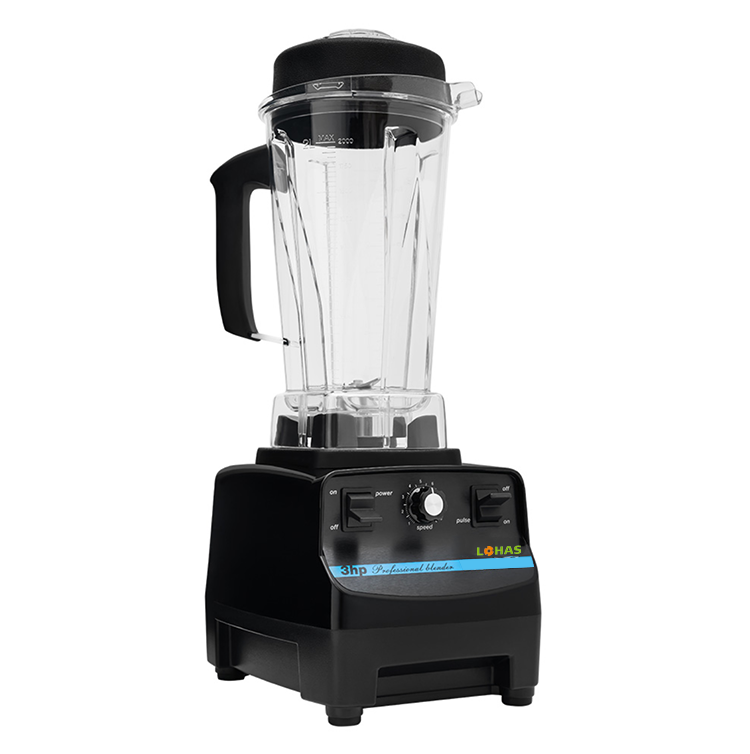
Understanding the relationship between motor wattage, blade velocity, and the physical properties of ingredients helps operators make smarter purchasing decisions and set realistic expectations for output quality. This article breaks down exactly how power levels influence blend texture, processing speed, ingredient versatility, and long-term equipment reliability — giving you a clear framework for matching machine capability to your operational demands.
The Physics Behind Blender Power and Blend Outcome
How Motor Wattage Translates to Blade Performance
Motor wattage in a commercial smoothie blender is a measure of the rate at which electrical energy is converted into mechanical work. Higher wattage means the motor can sustain greater torque — the rotational force applied to the blade assembly — without slowing down under resistance. This distinction matters enormously in commercial settings where ingredient loads are heavy and cycle times are short.
When a blade encounters a dense ingredient like frozen mango or a handful of raw kale, the motor must overcome that resistance without dropping below the minimum blade speed needed to shear and emulsify effectively. A lower-powered unit will bog down, producing uneven particle sizes and a grainy or chunky final texture. A higher-powered motor maintains consistent blade velocity throughout the blend cycle, which directly translates to a smoother, more uniform result.
In practical terms, a commercial smoothie blender operating at 1500W or above — roughly equivalent to 2 to 3 horsepower — can sustain the blade tip speeds necessary to break down cell walls in fibrous produce, fully liquefy ice crystals, and create the fine emulsions that define a premium smoothie texture. Units operating below this threshold may handle lighter loads adequately but will show limitations as ingredient complexity increases.
Blade Tip Speed and Its Role in Texture
Blade tip speed, measured in meters per second, is the actual velocity at which the outermost edge of the blade travels through the ingredient mass. This figure is directly governed by motor power and blade geometry. In a well-engineered commercial smoothie blender, high tip speeds create a vortex that continuously pulls ingredients down into the blade zone, ensuring every particle is processed rather than riding above the cutting action.
The result of sustained high tip speed is a finer particle size distribution across the finished blend. Smoothies produced at higher blade velocities have a noticeably silkier mouthfeel because fibrous cell structures are more completely ruptured, releasing more liquid and reducing the perception of texture. This is particularly relevant for ingredients like spinach, flaxseed, and raw beets, which require aggressive mechanical action to break down fully.
Operators who have switched from a mid-range unit to a high-power commercial smoothie blender frequently report that the same recipe produces a measurably different result — not because the ingredients changed, but because the machine is now capable of completing the mechanical work the recipe actually requires. Power is not just a performance buffer; it is a direct input into the quality of the finished product.
Power Requirements Across Different Ingredient Types
Frozen Ingredients and Ice Processing
Frozen fruit and ice are among the most mechanically demanding inputs a commercial smoothie blender will encounter. Ice in particular requires significant impact force to fracture, and if the motor cannot sustain blade speed through the initial resistance, the result is large ice shards suspended in an otherwise liquid blend. This is a common failure mode in underpowered equipment and one of the clearest indicators that a machine is not suited for high-volume smoothie production.
A commercial smoothie blender with sufficient wattage will pulverize ice into a fine, snow-like consistency within seconds, integrating it fully into the liquid base rather than leaving detectable chunks. This matters both for texture and for temperature consistency — finely processed ice melts more evenly, keeping the drink cold without creating pockets of dilution as large chunks melt unevenly after serving.
Frozen fruit presents a slightly different challenge because it combines hardness with high fiber content. Berries, mango, and pineapple all have cell structures that resist blending when frozen. A high-power commercial smoothie blender breaks these down completely, releasing the natural sugars and pigments locked inside the cells and producing a vibrant, intensely flavored result that lower-power machines simply cannot replicate consistently.
Fibrous Greens, Seeds, and Nut-Based Ingredients
Green smoothies have become a staple offering in health-focused food service environments, and they place specific demands on a commercial smoothie blender that go beyond raw speed. Kale, spinach, celery, and similar ingredients contain long cellulose fibers that wrap around blades and resist cutting unless the motor can maintain torque under that load. Insufficient power results in visible green flecks and a stringy texture that customers find unpleasant.
Seeds such as flaxseed, chia, and hemp require high-impact processing to crack their outer shells and release the nutritional content inside. A commercial smoothie blender with adequate power will grind these seeds into a fine suspension, making their nutrients bioavailable and their texture imperceptible. A lower-powered unit will leave seeds largely intact, reducing both the nutritional value and the textural quality of the finished drink.
Nut butters and whole nuts introduce viscosity challenges. As nuts break down, they release oils that thicken the blend significantly, increasing resistance on the motor. A commercial smoothie blender designed for professional use handles this viscosity increase without stalling, producing smooth, creamy nut-based blends that are consistent from the first batch to the last in a long service period.
How Power Affects Throughput and Operational Efficiency
Cycle Time and Service Speed
In a commercial kitchen or café environment, blend cycle time is a direct operational cost. A commercial smoothie blender that requires 90 seconds to produce an acceptable result occupies the station for longer, limits throughput during peak hours, and increases the risk of inconsistency as staff adjust timing by feel rather than by a reliable standard. Higher motor power shortens cycle times by completing the mechanical work faster and more decisively.
A well-powered commercial smoothie blender can typically complete a full blend cycle in 30 to 45 seconds for most standard recipes, compared to 60 to 90 seconds or more for lower-powered alternatives. Over the course of a busy morning service, this difference compounds significantly. Faster cycle times mean more drinks per hour, shorter customer wait times, and less pressure on staff during peak demand periods.
The consistency benefit is equally important. When a commercial smoothie blender has enough power to complete the blend fully within a defined time window, staff can rely on a standardized process rather than making judgment calls about whether a blend 'looks done.' This reduces variation between batches and between different operators, which is essential for maintaining product quality standards across a team.
Motor Longevity and Heat Management
A motor that is consistently operating near its maximum capacity will generate more heat and experience greater mechanical stress than one that has adequate headroom above typical load requirements. This is why choosing a commercial smoothie blender with a motor rated above the minimum needed for your typical recipes is a sound long-term investment rather than an unnecessary expense.
Commercial-grade motors in high-power blenders are typically engineered with thermal protection systems, reinforced bearings, and cooling mechanisms that allow sustained operation across multiple consecutive cycles. These design features are only effective when the motor is not already being pushed to its limits by routine workloads. A machine with genuine power headroom runs cooler, experiences less wear, and maintains consistent performance over a longer service life.
Operators who track maintenance costs over time consistently find that investing in a properly powered commercial smoothie blender reduces the frequency of motor replacements, blade assembly wear, and unplanned downtime. The upfront cost difference between an adequate and an underpowered unit is typically recovered within the first year of commercial operation through reduced maintenance and replacement expenses.
Matching Power Specifications to Your Specific Use Case
Volume, Recipe Complexity, and Service Environment
Not every commercial smoothie blender application requires the same power level, but the threshold for 'sufficient' power is higher than many operators initially assume. A juice bar producing 100 or more smoothies per day with recipes that include frozen fruit, greens, and seeds needs a machine rated at a minimum of 1500W, with 2000W or higher being preferable for sustained peak-hour performance. A lower-volume café with simpler recipes may manage with slightly less, but the margin for error is narrow.
Recipe complexity is a more nuanced factor than volume alone. A commercial smoothie blender used exclusively for simple fruit and juice blends faces less mechanical demand than one processing dense green smoothies or protein shakes with nut butter. Operators should evaluate their most demanding recipe — not their average recipe — when determining the minimum power specification they can accept without compromising quality or equipment longevity.
Service environment also influences the decision. A commercial smoothie blender in a high-ambient-temperature kitchen will run hotter under load than the same machine in a climate-controlled environment. In warmer conditions, additional power headroom provides a meaningful buffer against thermal stress, making a higher-rated motor an even more practical choice for kitchens in warm climates or poorly ventilated spaces.
Container Capacity and Power Pairing
The relationship between container volume and motor power is often overlooked but critically important. A commercial smoothie blender with a 2-liter container requires more power to process a full load than the same motor driving a 1-liter container, because the blade must move a larger mass of ingredients through a greater volume of space. Underpowering a large-capacity blender is one of the most common specification errors in commercial kitchen procurement.
When evaluating a commercial smoothie blender, the power-to-capacity ratio should be assessed as a combined specification rather than two independent figures. A 2-liter container paired with a 1500W motor represents a reasonable balance for most commercial applications. Increasing container size without a corresponding increase in motor power will produce the same performance limitations as simply using an underpowered machine — longer cycle times, inconsistent texture, and accelerated motor wear.
Operators planning to scale their menu or increase batch sizes should factor future capacity needs into their current purchasing decision. Selecting a commercial smoothie blender with both the power and the container volume to handle anticipated growth avoids the cost and disruption of premature equipment replacement as the business expands.
FAQ
What wattage is considered sufficient for a commercial smoothie blender used in a busy café?
For a busy café environment processing smoothies with frozen fruit, greens, and seeds, a commercial smoothie blender rated at 1500W or higher is generally considered the practical minimum. Units in the 2000W to 2200W range provide additional headroom for demanding recipes and sustained peak-hour use, reducing thermal stress and extending motor life over time.
Does higher power always mean better blend quality in a commercial smoothie blender?
Higher power enables better blend quality by sustaining blade speed under load, but power alone does not guarantee results. Blade design, container geometry, and the vortex dynamics of the specific machine all contribute to the final outcome. A well-engineered commercial smoothie blender at 1500W will outperform a poorly designed unit at 2000W. Power is a necessary but not sufficient condition for premium blend quality.
How does motor power affect the lifespan of a commercial smoothie blender?
A motor consistently operating near its maximum rated capacity generates more heat and mechanical stress, which accelerates wear on bearings, seals, and the motor windings themselves. A commercial smoothie blender with adequate power headroom above typical load requirements runs cooler and experiences less cumulative stress, resulting in a longer service life and lower maintenance costs over the equipment's operational period.
Can a commercial smoothie blender with high power handle both hot and cold ingredients safely?
Many high-power commercial smoothie blenders are designed to handle a range of temperatures, but operators should always verify the manufacturer's specifications for thermal limits before processing hot liquids. Containers rated for hot blending are typically made from materials that can withstand thermal expansion, and the motor's thermal protection systems are calibrated accordingly. Using a commercial smoothie blender outside its rated temperature range can damage seals and compromise safety, regardless of motor power.
Table of Contents
- The Physics Behind Blender Power and Blend Outcome
- Power Requirements Across Different Ingredient Types
- How Power Affects Throughput and Operational Efficiency
- Matching Power Specifications to Your Specific Use Case
-
FAQ
- What wattage is considered sufficient for a commercial smoothie blender used in a busy café?
- Does higher power always mean better blend quality in a commercial smoothie blender?
- How does motor power affect the lifespan of a commercial smoothie blender?
- Can a commercial smoothie blender with high power handle both hot and cold ingredients safely?